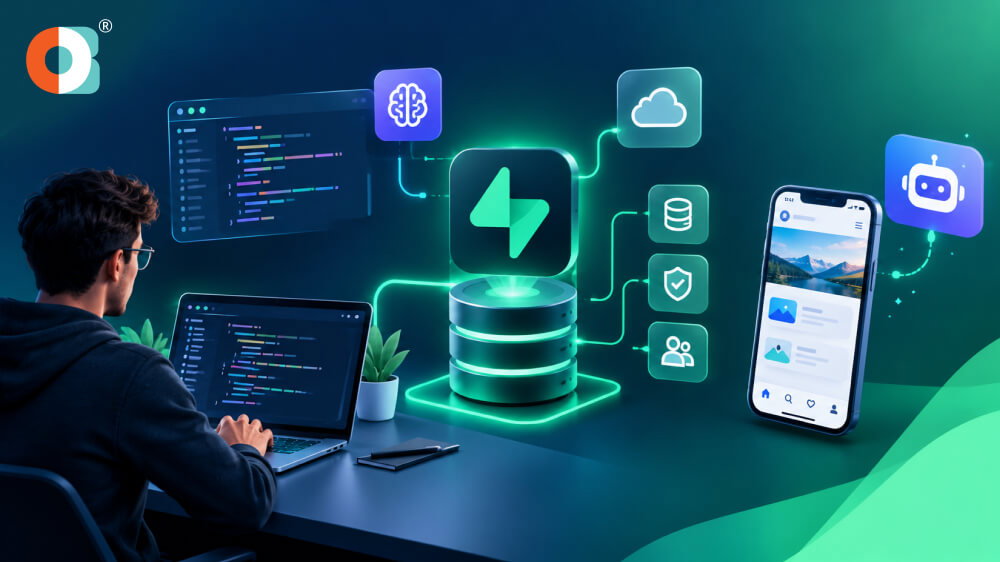

Quick answer: PostgreSQL development involves designing, building, connecting, and maintaining applications on PostgreSQL, the open-source relational database. It covers schema design, query development, APIs, migration, performance tuning, and ongoing support.
PostgreSQL is now the database most developers reach for first. In the 2025 Stack Overflow Developer Survey, 55.6% of respondents said they had used it, ahead of MySQL at 40.5%, and it ranked as both the most desired and the most admired database. For a business, that popularity means a deep talent pool, a mature ecosystem, and no licence fee.
The technical case is just as strong. PostgreSQL stores structured relational data and semi-structured JSON in the same database. It supports full-text search, geospatial queries through PostGIS, and vector search through the pgvector extension for AI features. Its transaction model keeps financial and operational records consistent, while role-based access control, row-level security, and SCRAM-SHA-256 password authentication protect the data inside. Indexing options, partitioning, and replication let one database grow from an MVP to a high-traffic platform.
Owebest is a PostgreSQL development company that treats the database as part of the product, not an afterthought. Our PostgreSQL developers handle schema design, backend code, APIs, migrations, and tuning together, so a decision made in the data layer doesn't become a problem in the application layer six months later. Whether you need a custom PostgreSQL database, application development, migration, integration, or performance work, one team can own it.
Whether you are starting a new build or fixing a database that has outgrown its design, our PostgreSQL development services cover the full lifecycle. Teams that want a second opinion before committing to an architecture can also use our PostgreSQL consulting services for design reviews, database audits, and technology selection.
We build databases and data-driven applications around your workflows, not a generic template. Custom PostgreSQL development starts with your data model and ends with a tested, documented system your team can run.
A well-designed schema prevents most performance and data quality problems before they start. Our PostgreSQL database development work focuses on structures that stay accurate as the application changes.
We build applications where PostgreSQL is the system of record, and we write the application code around how the database actually behaves under load.
Most applications reach PostgreSQL through an API layer. We design that layer to be secure, versioned, and fast.
Moving to PostgreSQL is a business decision as much as a technical one, because it can remove licence costs and vendor lock-in. Our PostgreSQL migration services cover planning, schema conversion, data transfer, validation, and cutover.
Slow pages and timeouts often trace back to a handful of queries or a poorly tuned configuration. We find the cause with measurement, then fix it.
Older PostgreSQL versions eventually stop receiving security fixes. PostgreSQL 14 reaches end of life on November 12, 2026, so any team still running it should plan an upgrade now. PostgreSQL 18 is the current major release, and PostgreSQL 19 is in beta at the time of writing.
A database needs regular care after launch. Our PostgreSQL support and maintenance plans keep production systems healthy and predictable.
The right PostgreSQL database solutions depend on what the application has to do. Our PostgreSQL application development work spans these product types.
Multi-tenant data models, subscription records, and per-customer isolation through schemas or row-level security.
Transaction-heavy internal systems with role-based access, audit trails, and reporting.
Catalogs, inventory, carts, and orders that stay consistent during traffic spikes, with JSONB for variable product attributes.
Ledgers, payments, and reconciliation where ACID transactions and audit logs are required.
Patient, appointment, and billing data with strict access control and traceability, designed to support regulatory requirements where they apply.
Relational models for customers, orders, invoices, and stock across many linked tables.
Reporting databases, partitioned event tables, and vector search with pgvector for AI features.
Structured content, revisions, permissions, and full-text search.
A dependable backend for user accounts, sessions, notifications, and synced data.
Data layers built for high-concurrency APIs, with connection pooling and caching.
PostgreSQL rarely works alone. Our PostgreSQL development services fit into the stacks your team already uses, so you do not need to rebuild everything around the database.
Node.js is a popular choice for APIs and real-time backends, and hooks up to PostgreSQL through mature drivers and query builders. We use this pair for REST services, background jobs, and event-driven applications. Long-term maintenance and hiring were still quite straightforward. The 2025 Stack Overflow survey shows that the most used web technology was Node.js (48.7%).
React never talks to the database directly. It calls a backend or API layer that reads and writes to PostgreSQL. We design that layer so screens load quickly, with paginated queries, sensible caching, and response shapes that match what the interface needs.
Express.js is a lightweight framework for building API endpoints on Node.js. It suits API-driven applications where PostgreSQL holds the business data, and Express handles routing, validation, authentication, and error handling.
The PERN stack uses Node.js, Express.js, React and PostgreSQL. It maintains the MERN JavaScript development experience, but substitutes MongoDB with a relational database, which works well for applications with connected data and strict consistency needs.
Scalable design for single-node, replicated, and partitioned deployments.
Structured relational models with constraints, and JSONB where flexibility helps.
Complex SQL, CTEs, window functions, views, and stored functions.
B-tree, GIN, GiST, BRIN, and partial indexes chosen for real query patterns.
ACID transactions, isolation levels, and locking strategies for concurrent writes.
Role-based access, row-level security, encryption in transit, and audit logging.
Application and third-party integrations through REST and other interfaces.
Query analysis, configuration tuning, connection pooling, and vacuum management.
Table partitioning, read replicas, and capacity planning for growing data and workloads.
Scheduled backups, point-in-time recovery, and restore testing.
Data is only useful when it reaches the systems that need it. Our PostgreSQL integration services connect your database with the tools around it.
PostgreSQL works best as the data layer behind an API. The API validates requests, applies business rules, and talks to the database, so applications and partners never touch tables directly. We build this layer with authentication, rate limits, versioning, and clear error handling, then connect it to CRMs, ERPs, payment gateways, and analytics tools. When other systems need to react to data changes, we use PostgreSQL features such as logical replication and LISTEN/NOTIFY, or an event pipeline, depending on volume.
REST APIs for web, mobile, and partner access
Third-party applications through their public APIs
Cloud platforms and managed database services
Business applications used across departments
CRM systems for customer and sales data
ERP systems for orders, inventory, and finance
Analytics platforms and reporting tools
Payment systems and gateways
Microservices that exchange data through defined contracts
A PostgreSQL migration moves your data, schema, and application queries from another database, or from an older PostgreSQL version, to a current PostgreSQL release. A good migration keeps downtime short, verifies every table, and gives you a tested way back if something goes wrong.
Teams migrate for clear business reasons: to cut licence costs, avoid vendor lock-in, use richer data types, or move off a version that is about to lose support. PostgreSQL 14, for example, stops receiving fixes on November 12, 2026.
We move data and logic from MySQL, SQL Server, Oracle, and other sources. That includes converting data types, rewriting incompatible SQL and stored procedures, and adjusting application queries. Where the source and target differ heavily, we test on a copy first and report what changes before anything goes live.
Older PostgreSQL installations often carry years of unindexed tables, bloated storage, and outdated extensions. We clean up the schema, retire unused objects, and move workloads onto a supported version. If your database still holds MD5-hashed passwords left over from an upgrade from PostgreSQL 13 or earlier, we also move authentication to SCRAM-SHA-256.
We move self-hosted databases to managed PostgreSQL services, or bring cloud databases back to your own infrastructure. We plan network access, backups, failover, and monthly cost before cutover.
Every migration includes row counts, checksums, and business-level checks that compare source and target. We do not sign off on a cutover until the numbers match.
Major upgrades between PostgreSQL versions need a plan. Depending on database size and downtime tolerance, we use dump and restore, pg_upgrade, or logical replication for near-zero downtime cutovers. We test extensions and application queries against the new version first.
PostgreSQL performance problems usually come from a short list of causes: slow queries, missing or unused indexes, table bloat, too many connections, and default settings running on production hardware. Our PostgreSQL optimization services find the real cause with data before changing anything.
We use pg_stat_statements and EXPLAIN ANALYZE to find the queries that consume the most time.
We add the indexes your queries need and remove the ones that only slow down writes.
We rewrite joins, subqueries, and pagination patterns that force full table scans.
We optimize the settings for memory, checkpoint and planner for your hardware and workload.
We add connection pooling so traffic spikes do not exhaust the server.
For capacity planning, we look at CPU, memory, disc I/O, autovacuum behaviour and storage growth.
We set alerts on replication lag, locks, long-running queries, and disk usage.
We trace slowdowns across the application, network, and database so the fix lands in the right layer.
The design of your database goes beyond merely holding information about your application. The PostgreSQL developers at Owebest will ensure that your database is efficient, integrated, and adaptable to evolving business dynamics. Whether through custom development or optimization, we will cater to the specific demands of your application.
Knowing how to use a database is not enough to work on PostgreSQL projects. Owebest experts deal with database structure, queries, integrations, and the requirements of the application. This way, the database will stay in sync with your application and minimizes the complexity in development.
Data used by each application must be structured to fit each one; the structure should be application-specific. Owebest's services for PostgreSQL are built with your business processes and application requirements in mind. The team can design various databases for applications such as a business platform, a web application, a mobile solution, and a data-driven product.
As your application grows you may be able to process more users and data within your database. Our PostgreSQL development company builds good architecture to prepare PostgreSQL for these changing demands. Here, database architecture and development are based on data relationships, indexing, queries and workload.
The security of databases should be taken into account from the project's inception. PostgreSQL offers roles, permissions, authentication and more access-control capabilities. Owebest can implement effective security measures depending on your application's information and access needs.
After creating and deploying the database, there is still a lot of work to be done in the development of PostgreSQL. Owebest is able to assist at various points in the process, from planning to development through to testing, deployment, optimization and maintenance.
PostgreSQL is frequently used as a back-end to other systems and applications. These relationships can be with APIs, websites, mobile apps, and third-party platforms. We integrate PostgreSQL and the necessary solutions to keep the data flow between systems reliable.
Transferring an existing database to PostgreSQL, involves proper planning. Therefore, modifications in the schema, queries, application, and integration will become necessary. We have a professional migration service of PostgreSQL that will migrate your application as per your requirement.
With an increase in the complexity of your application and data, your database requirements will also increase. We can assist you in creating a maintenance plan for optimal database performance.
From initial discussion to deployment, we maintain a clear process when offering PostgreSQL development services. Our experts take an organized approach, depending on your application, data and business needs.
Before starting anything, we first understand your business goals. After that, we try to know your requirements regarding the functionality of your application and database requirements.
We design a database for your application structure. This will involve creating tables, schemas, relationships, data types and indexes if necessary.
We develop the necessary database or application parts of PostgreSQL according to the defined architecture and application needs. These can be schemas, queries, indexes, functions, and other things related to the database.
We connect PostgreSQL with the APIs, services, and other external platforms your application needs. They’re also tested to make sure that when they’re integrated, the data gets transferred properly.
Before going to the deployment phase, we test your database along with the interaction of the database with the applications. We consider various aspects of your queries, indexes, database structures and security, among others.
We build the PostgreSQL solution for its required development, staging or production environment. Once deployed, we validate the setup to make sure the database is functioning properly with the application.
Our relation doesn’t end with the deployment. We offer PostgreSQL support and maintenance as your application and data needs evolve. We offer troubleshooting, maintenance, optimization and updates.
PostgreSQL is able to integrate with multiple technologies in applications. We employ appropriate technologies that meet the requirements of your application.
Each industry has varying data requirements and your database must reflect the way in which your business runs. We offer custom PostgreSQL development that best meets your unique business requirements.
Maintain all financial transactions connected, traceable and available for application workflows at real-time. PostgreSQL supports managing accounts, payments, transaction records, customer information and more financially related information.
Provide a reliable database for healthcare applications for all patient interactions. Easily manage patient records, appointments, reports, prescriptions, and billing through PostgreSQL applications.
Ensure seamless flow in your ecommerce store from discovery to checkout. For eCommerce applications, PostgreSQL links product data, customer accounts, carts, orders, payments and inventory.
Create and maintain a database to power your entire SaaS application. We offer PostgreSQL development services to store users, subscriptions, permissions, billing information, settings, and other related information.
Manage learning platforms with organized and linked learning data. PostgreSQL can provide data for student portals, course systems, assessments, attendance, grades, assignments and learning records.
Ensure seamless flow of deliveries/transfers, routes, shipments and warehouse data through your logistics platform. PostgreSQL can facilitate the link between orders, vehicles, routes, warehouses, shipment statuses and delivery information.
Convert fragmented data about property into a single database to improve property operations. Listings, agents, buyers, sellers, enquiries, appointments, documents and transaction records can be handled by PostgreSQL.
Maintain guest and booking information throughout the search to the end of the stay. PostgreSQL is suitable for reservations, travellers, rooms, properties, schedules, payments, availability and other booking information.
Provide a centralized location for your retail applications to manage your product, customer and sales activity. Catalogues, inventory, pricing, orders, customer profiles and store operations can all connect to PostgreSQL.
Connect disparate business information in one place while maintaining the relationships, systems, and processes between teams. PostgreSQL can power enterprise applications that process departmental data, internal processes, integrations, and shared business records. Businesses can work with a software development company to build scalable PostgreSQL-powered solutions tailored to their operational requirements.
Want to get PostgreSQL development services for your next app but confuse between other databases too? Let us take the burden off your shoulder.
Not sure which database is best for your needs?
You feel traditional database architecture is not working anymore? Then, it’s time to get custom PostgreSQL development for creating your database according to your own workflows, data and integrations.
When your app is connecting people, processes, products, or records, the database structure is important. With our custom-made PostgreSQL schemas, everything remains connected and more manageable.
You might have workflows which have rules that are not easily supported by existing database configurations. We create any database functions, queries, constraints and logic based on those requirements.
The large datasets can uncover slow queries, the inefficiencies in indexes, and the poor database design. We tune PostgreSQL to your specific data growth, query sets and workload.
A legacy database may contain years of unused objects, legacy structures and complex application dependencies. We modernize the PostgreSQL environments while safeguarding critical data and business capabilities.
Your database might require sharing information with APIs, applications, payment systems, or third-party platforms. We create PostgreSQL integrations based on your desired dataflows and system design.
Applications are growing and that require database decisions to support the growing number of users and data. We design PostgreSQL architecture with indexing, partitioning, connections and future workload modifications in mind.
Complex reports, dashboards, and data views specific to an application might not be supported by standard structures. The schema is driven by the queries, filters and reporting you require for your platform.
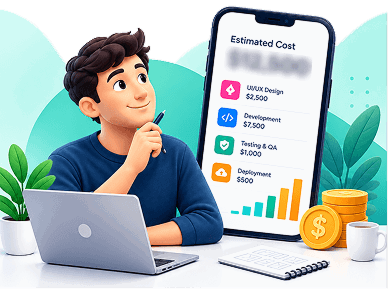
There is no fixed cost when it comes to developing PostgreSQL since the price changes depending on a few factors.
A project with multiple advanced features, seamless workflows, or custom database logic will cost more to develop.
The more storage, migration, testing and optimization, the more expensive it is to develop the final database.
The full cost of the project is increased by each API or platform as they are being added and tested.
As we have to do more data conversions, validation and application changes for complex migrations, it increases project costs.
The more specialists we have to include in a project, and the more hours will have to pass, the higher the cost of engagement will be.
Implementing advanced security controls, authentication, permissions and testing requires additional development effort and cost.
The extra optimization, indexing, query tuning, and testing are necessary for high-performance applications, resulting in higher costs.
If you have multiple environments, failover, backup and complex cloud set-ups, we will need extra infrastructure and deployment effort, increasing the final price.
To get continued updates and monitoring from us, you have to spend extra.
Depending on the project size, duration and the required PostgreSQL skill level, select the engagement type.
Create a separate PostgreSQL development team for long-term projects and ongoing development. This model ensures that you will always have the same level of expertise when your application evolves.
Do you have a well-defined PostgreSQL project with a clear goal, deliverables and time line? Pick this model to keep the concentration around an agreed project scope.
Already have a development team and need Postgres skills? Hire PostgreSQL Developers to boost your current workforce and address particular technological gaps.
Get a smooth-running PostgreSQL environment after deployment. Database support can include optimization, troubleshooting, updates and regular maintenance.
PostgreSQL Development is the creation of databases and applications with the help of PostgreSQL as the major database component. This can include database design, database querying, APIs, database migration, optimization, and database maintenance.
At Owebest Technologies, we provide excellent and custom PostgreSQL development services. They cover database design, application development, API integration, migration, optimisation, upgrades and maintenance.
PostgreSQL offers relational databases, JSON, transactions, and strong access control mechanisms. In addition to this, PostgreSQL is equipped with strong indexing features and is scalable when complex relationships between data have to be handled.
Yes, we offer custom PostgreSQL development as per your application requirements. The development may include the development of schemas, functions, indexes, or database logic.
Yes, there are databases which can be migrated from platforms such as MySQL, SQL Server, and Oracle. It may involve schema conversion, data transfer, query changes, validation and cutover planning.
Yes, the existing PostgreSQL database can be optimized for query performance problems, poor indexing and resource utilization bottlenecks. We offer optimization through various techniques such as query tuning, index modifications, configuration adjustments, and connection management.
Yes, PostgreSQL can be used for Node.js backend services and APIs. React connects via the backend, which processes the request to the database and processes application logic.
Yes, we offer PostgreSQL integration services, and you can integrate this into REST APIs, third-party platforms and back-end services. Integrations can be used with CRMs, ERPs, payment processors, and analytics platforms.
The cost varies based on your application requirements, database size, integration needs, security requirements, and deployment architecture. Other factors such as migration, performance needs, team size and maintenance needs can also influence the final cost.
Yes, maintenance can proceed after the application is live. Our experts offer continuous monitoring, troubleshooting, backups, performance checks, security updates and database optimization.
No matter what you need, from customized PostgreSQL database, application development, to data migration, integration, or performance optimization, Owebest can help you. Our experts will develop a PostgreSQL solution that meets your requirements.
Proof of impact through innovation
39, Vidyut Abhiyanta Colony, Pradhan Marg, Malviya Nagar, Jaipur
Rajasthan- INDIA
2076 Seminole Blvd. Suite A Largo, FL, 33778, United States
3/27 Abercrombie Street, Howick, Auckland 2014, New Zealand
ISO-certified, CMMI Level 3 company delivering reliable, scalable, and high-performance digital solutions across the globe.