









AI Avatar Therapy App Development: Key Features, Technologies, and Trends
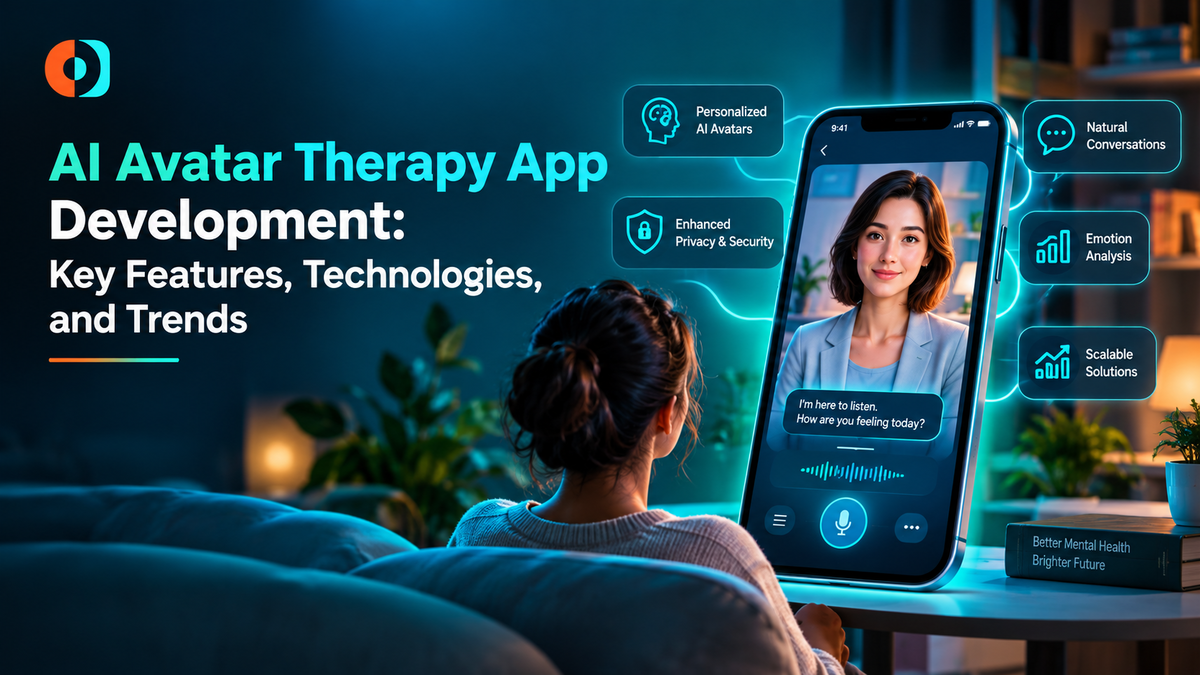
Imagine you have funding, a clinical advisor, and a clear plan to launch an AI avatar that offers emotional support. Before you talk to any vendor, you want to know what AI avatar therapy app development really involves, including the legal side. The question is where to begin.
This question is becoming common because the need is large. About 137 million Americans live in a federally designated mental health shortage area, and a clinic cannot staff the night. SAMHSA’s 2024 survey found stigma to be the most common reason adults skipped care. An avatar that answers at any hour gives people a softer first step. Keeping them is harder, as the median 30-day retention across 93 popular mental health apps was only 3.3%.
However, AI avatar therapy app development involves much more than placing an animated face on top of a chatbot. Most founders pick a vendor first and learn about the laws later, which costs months and often ends in a rebuild. The better order starts with the product position. A wellness coach and a tool that treats depression can look the same on screen, yet they are very different products with very different rules.
So which type of app should you build first? What does an avatar add over a text chatbot, and is it worth the extra build? Where should crisis detection sit in the system? What does a HIPAA compliant AI avatar therapy app really require, and how do you check a vendor who says they have it?
This guide answers these questions and explains how to build an AI avatar therapy app from the first decision to launch. It covers how an avatar works behind the scenes, the features it needs, the step-by-step process, the tech stack, the cost, the main risks, and the US legal requirements.
Whether you are a founder, a clinic owner, or a product lead, this guide will help you understand what it takes to build safely and brief a vendor with confidence.
What Is an AI Avatar Therapy App, and How Is It Different from a Standard AI Therapy App?
An AI avatar therapy app is a mental health app where a digital character talks with the user using voice and facial expression. A language model writes the replies. Safety rules and clinical protocols guide them. Most are built for coaching, CBT-style skills practice, and between-session support, not for diagnosis.
|
Factor |
Standard AI therapy app |
AI avatar therapy app |
|---|---|---|
|
Interaction mode |
Text chat, sometimes voice |
Live voice and face |
|
Engagement |
Easy to pause and return |
Can feel more personal; evidence is mixed |
|
Build complexity |
Moderate |
Higher: speech, rendering, and sync |
|
Running cost |
Model and hosting fees |
Adds per-minute streaming fees |
|
Regulatory exposure |
Same core rules |
Same rules, more scrutiny of human-like claims |
|
Trust risk |
Lower; clearly a bot |
Higher; users may treat it as a person |
Consider a scenario: Is an AI avatar therapy app actually different from a text therapy chatbot, or is the avatar just a visual skin on the same product? We need to know before we pay for the extra build.
Partly a skin, partly not. The same language model can power an AI therapist avatar and a text bot, so the words can be identical. The avatar changes what surrounds the words: cost, delay, consent for voice and video, and how users feel.
The evidence is thin. A 2017 study found service members told a virtual interviewer more about PTSD symptoms than they wrote on standard forms. That points to a real effect on disclosure. But a 2024 trial of 45 people rated a text chatbot higher on usability than a digital human.
And Therabot, the strongest generative AI trial so far, was text-only. An avatar adds tone, pacing, and presence. It does not add clinical skill or safety. In AI therapy app development, treat an AI avatar mental health app as a bet you test, not a proven upgrade.
How Does an AI Avatar Therapy App Work?
This is how AI avatar therapy apps work. A conversational AI avatar feels like a real-time AI avatar only when every stage streams. Let’s have a look at the workflow.
|
Stage |
What happens |
|---|---|
|
Capture |
The mic records. The app decides when the user has stopped talking. |
|
Speech to text |
Text streams in while the user talks, so most work is done before they stop. |
|
Input safety check |
Rules and a classifier scan for crisis signals before the model sees the message. |
|
Language model |
Writes the reply from your protocol, memory, and rules. Streams the first words fast. |
|
Output safety check |
Checks the reply sentence by sentence before it is spoken. |
|
Text to speech |
Turns the first sentence into audio while the model writes the next. |
|
Avatar rendering |
Matches lips and face to the audio and streams video. |
Consider a scenario. What actually happens between a user speaking and the avatar answering, and how fast does it need to be before it feels natural? Our early prototype feels laggy and robotic.
Usually each stage waits for the one before it. The app waits for the user to finish, then for the full reply, then for the full audio. Stream every stage so the avatar starts speaking while the model is still writing. People leave about 200 milliseconds between turns in normal communication. You will not match that, but staying near one second feels natural to most users, and past two seconds it feels broken. Flat text to speech and a mouth that lags the voice add to the robotic feel, so test both.
Where does the clinical safety logic sit in the stack? Does it check the user’s message before the language model, after it, or both?
Both, plus a third place. Before the model, a fast check reads the message for crisis signals such as self-harm. If it fires, the model is skipped and a fixed crisis script runs. After the model, a second check blocks replies outside your protocol, such as diagnosis or medication advice. Across the session, a monitor watches for risk that builds slowly, which no single message shows. The safety layer sits around the model. A prompt can be ignored. A rule outside the model cannot.
Why Should Healthcare Businesses Invest in AI Avatar Therapy App Development?
Investing in an AI avatar therapy app development makes sense where demand is bigger. If you plan to develop an AI avatar therapy app, these numbers show where the value is and where the limits are.
1. Access and availability outside clinic hours
A clinic cannot staff the night. An AI avatar for mental health can answer at 2 a.m. and point the user to a human the next day. That is a case for a tool that works after hours and between visits. It is not a case for replacing the clinician.
·Lower stigma and a lower barrier to a first conversation
Stigma was the most common reason adults skipped care in a report. A USC study found service members disclosed more PTSD symptoms to a virtual interviewer than on standard forms. That also raises the safety stakes, because users may share crisis details with software.
2. Between-session support and homework adherence
In CBT, finishing homework links to better results. A meta-analysis of 27 studies found an effect size of r = .22. An avatar can prompt practice between visits, and the therapist reviews it. The figure shows a link and not proof that an avatar raises completion. Test that in your pilot.
3. Clinic capacity and intake efficiency
In a Nature Medicine study of 129,400 people, referrals rose 15% at services using an AI intake chatbot, against 6% elsewhere. That tool was a chatbot, not an avatar. Intake is a lower-risk place to start when building an AI avatar therapy app, because the tool collects information and a human makes the care decision.3. Engagement and retention advantages of a face and voice
Retention is the hard part. Across 93 popular mental health apps, median 30-day retention was 3.3%. A face and voice may help, but proof is limited. Measure it in your pilot. That rate means about 97 in 100 users are gone by day 30, so even a small gain would matter to your unit economics.
4. Scalable B2B value for employers and providers
Some 73% of large employers reported higher use of mental health services in 2025, yet typical EAP use sits around 3% to 6%. Buyers want tools people actually use. One platform can serve many employers or clinics, so you build once and license many times. That also fits the creation of an AI avatar therapy app for counselors and coaches.
Types of AI Avatar Therapy Apps You Can Build
Types of AI therapy apps differ in three ways that covers who uses them, what they claim, and how much proof they need. You must choose the type that you want to develop before you select a vendor.
1. CBT coaching and wellness companion
Teaches skills like thought records and breathing. It must not diagnose or claim to treat. This is the fastest and lowest-risk AI avatar wellness app to launch, and a good first product for a team new to clinical work, or for coaches who want a branded avatar.
2. Clinician-supervised extension for between-session support
Works under a therapist’s plan, as an extension of care and not a stand-in for it. It assigns practice, checks in, and flags risk to the clinician, who sees summaries between sessions. This suits states that require a licensed professional.
3. Therapist training and patient simulation avatars
Students practice on a simulated client who can show distress, resistance, or risk. No real patient is at risk, so legal exposure is lower. A therapist training simulation app suits universities and training programs.
4. Immersive VR or XR therapy (the Cedars-Sinai XAIA model)
XAIA places an AI avatar in a calm VR setting on Apple Vision Pro. Cedars-Sinai reports its study found the app beneficial and safe. Headset cost limits reach, so VR therapy app development suits clinics and research more than mass-market launches.
5. Condition-specific platforms (anxiety, social anxiety, PTSD support, recovery support)
Each condition needs its own protocols. Narrow scope allows tighter safety rules and clearer evidence. It also raises the odds that regulators see a treatment claim. Social anxiety, for example, suits practice with a virtual audience.
6. Employer and EAP wellness avatars
Offered as a workplace benefit. Privacy is the key point: employers must never see individual chats. Make use opt-in and keep data away from HR.
7. B2C consumer app vs B2B platform
B2C needs marketing spend, age checks, and careful claims. B2B has longer sales cycles but steadier revenue, and a buyer who can bring clinical oversight. An AI avatar coaching app sold to coaches follows the B2B path. Choose by asking who pays and who carries clinical responsibility.
Consider a scenario: We run a small therapy practice and want an avatar that supports clients between sessions, not one that replaces us. What type of app are we actually building?
A clinician-supervised extension. The avatar works inside a plan your therapists approve, and your team sees what happens between sessions.
Consider a scenario: I want to launch a wellness avatar first and move toward clinical features later. Does the first version limit what we can do down the line?
It can, if you build it that way. You must plan for clinician review, audit logs, and stricter consent from day one. If you add them later, it means reworking your data flows and your legal text.
Must-Have Features to Include for AI Avatar Therapy App Development
Features decide both safety and cost. The table below lists AI avatar therapy app features, the features of an AI therapy app that matter most, with a launch priority for each. It is also where crisis detection in mental health apps and AI avatar design for mental health apps get scoped, next to core mental health app features.
You might have question: What features are must-have at launch versus nice-to-have for a therapy avatar app? We want to scope an MVP without cutting anything that affects safety.
Anything marked Must-have protects users or keeps you compliant. Do not cut it to save budget. You can remove from the Later column first.
Also, which avatar style makes people open up more, a realistic human face or a stylized character? We cannot afford to test both.
They do not have to test both. No strong evidence shows realistic faces make people open up more. A stylized character avoids the uncanny valley and costs less to build. Start there.
|
Feature |
What it does and why it matters |
Launch priority |
|---|---|---|
|
Crisis detection and escalation |
Scans text and voice for self-harm or danger signs. Switches to fixed scripts, 988 details, and a human handoff. |
Must-have |
|
Clear AI disclosure |
Tells users at the start and during use that they are talking to AI. Several states require it. |
Must-have |
|
Informed consent flow |
Explains data use, voice and video capture, and service limits. Records the user’s consent. |
Must-have |
|
Clinical protocol engine |
Keeps chats inside methods your clinical advisor approved, such as CBT. |
Must-have |
|
Input and output guardrails |
Checks each message going into and out of the model. Blocks harmful or off-topic replies. |
Must-have |
|
Voice conversation |
Lets users talk instead of type, using streaming speech to text and text to speech. |
Must-have |
|
Avatar with lip sync and expression |
Animated face matched to speech. A stylized design is the safer start. |
Must-have |
|
Security and encryption |
Protects accounts and data in transit and at rest, with access controls. |
Must-have |
|
Age gate and minor safeguards |
Checks age, limits or blocks minors, and handles parental consent where required. |
Must-have |
|
Session memory with user control |
Remembers goals and progress. Users can view and delete it. |
Must-have |
|
Audit logs and transcript review |
Records safety events and model outputs so your team can review them. |
Must-have |
|
Dependency safeguards |
Caps long sessions, suggests breaks, and nudges users toward people and human care. |
Must-have |
|
Clinician dashboard |
Shows therapists summaries, risk flags, and homework status. |
Must-have if supervised |
|
Mood check-ins |
Short plain-language check-ins that track change over time. |
Early |
|
Skills and homework library |
CBT exercises, breathing guides, and journaling prompts. |
Early |
|
Voice-only fallback |
Keeps the session going when video or bandwidth drops. |
Early |
|
Outcomes and engagement analytics |
Tracks usage, safety events, and results for your pilot and buyers. |
Early |
|
Multilingual support and integrations |
Adds languages, cultural adaptation, wearable data, and EHR links. |
Later |
Safety features are not extras. If your budget is tight, add only fewer avatar features.
Not sure which features fit your product position? We can map them with you before you commit to a build.
How to Build an AI Avatar Therapy App: Step-by-Step Process
Building an AI avatar therapy app includes nine steps as mentioned:
- Define the product position and target states
- Clinical advisory and protocol design before any code
- Legal and compliance planning
- Scope the MVP and design the conversations
- Design the avatar and persona
- Build the conversation engine and the safety layer
- Integrate speech, avatar rendering and real-time streaming
- Clinical testing, red-teaming and a supervised pilot
- Launch, monitor and improve
This is how to build an AI avatar therapy app, and the AI avatar therapy app development process behind it. Use it to make an AI avatar therapy app of your own, whether you are developing an AI avatar therapy app for mental health businesses or planning AI avatar app development for therapist-led practices.
1. Define the product position and target states
First of all, the team starts by deciding whether you are building a wellness companion, a clinician-supervised tool, or a regulated device. The output is a one-page product brief covering who the user is, what the avatar will and will not do, and which states you will launch in first. Every later decision depends on this product brief, so the team does not write code until you sign off on it.
2. Clinical advisory and protocol design before any code
Now, your clinical advisor and the product team turn the method like CBT into rules the avatar can follow. They write the conversation flows, the crisis definitions, the topics the avatar must refuse, and the handoff rules for a human. The advisor signs off on this content. AI app developers then load it into a protocol store so the model draws from approved material instead of improvising.
3. Legal and compliance planning
After that, your healthcare lawyer reviews your position and launch states, then gives the development team a short list of requirements. It includes the wording for AI disclosure, consent screens, age rules, and what the app can claim in the store listing.
The team also decides who is a HIPAA business associate and which vendors need a signed BAA. They build for the stricter of your first two states, and make consent screens configurable by state. Adding a state later then means a settings change and a legal review.
4. Scope the MVP and design the conversations
Now, the the team sorts features into must-have, early, and later. Anything that protects users stays in the first release. They then script the main journeys like onboarding, first session, a normal check-in, a bad-mood day, and a crisis moment.
Also, the UI/UX designers build these as click-through prototypes, and your clinician tests them. You should know that fixing a script costs little at this stage, and fixing it after launch costs a lot.
5. Design the avatar and persona
The development team picks a stylized character, since it’s cheaper and avoids the uncanny valley. They define a voice, a tone, and a name that does not suggest a doctor or therapist.
They also design a small set of expressions like listening, concern, encouragement plus idle motions so the face never looks frozen. This is also when the AI disclosure is designed into the screen.
6. Build the conversation engine and the safety layer
Now, the backend engineers build the safety layer first, and the avatar comes after. The layer has four parts:
-
A fast input check that scans every message for crisis signals before the model sees it. If it fires, the model is skipped and a fixed crisis script runs with 988 details.
- A language model setup that draws replies from your approved protocol and memory.
- An output check that blocks diagnosis, medication advice, and off-protocol replies.
- A session monitor that watches for risk building slowly across messages.
They also build consent records, audit logs, encryption, age gating, and the clinician dashboard if you are going supervised. Rules sit outside the model because a prompt can be ignored but a rule can’t.
7. Integrate speech, avatar rendering and real-time streaming
Once the conversation engine is built, the team connects live voice and the face. Speech to text, the model, text to speech, and avatar rendering all run as streams, so the avatar starts talking while the model is still writing. The target is about one second between the user stopping and the avatar answering.
Engineers test lip sync against the audio, add a voice-only fallback for weak networks, and put the avatar behind their own interface so a vendor can be swapped later. They also run two avatar vendors on your network for a week and compare first-frame time and uptime.
8. Clinical testing, red-teaming and a supervised pilot
Testing happens in three rounds. First, QA runs the crisis test set the clinicians built, and any failure blocks the release. Second, red-teamers try to break the avatar with indirect crisis language, jailbreaks, and requests for diagnosis.
They also check how well speech recognition handles accents. Third, a small pilot runs with real users under clinician watch. Outcome measures are set before the pilot starts, so the results mean something. Clinicians read a sample of real chats each week.
9. Launch, monitor and improve
Lastly, the team releases to the first states and watches live dashboards for crisis events, response delay, cost per session, drop-off, and signs of heavy dependency. Clinicians keep reviewing sampled transcripts. Every model update, new feature, or new state goes through the same safety tests and a legal check before release.
Long sessions and streaks are treated as risk signals, not wins. Over time the team uses pilot and live data to trim cost, tune the voice and face, and decide whether the avatar is actually earning its place.
Consider a scenario: We want to launch in two states first and add more later. Will our first architecture and consent flows hold up, or will we have to rebuild?
They hold up if you plan for it in steps 3 and 6. Build for the stricter of your two states. Make consent and disclosure screens configurable by state. Store data by region. Then adding a state is a settings change and a legal review.
What Is the Cost of Conversational AI Avatar Therapy App Development?
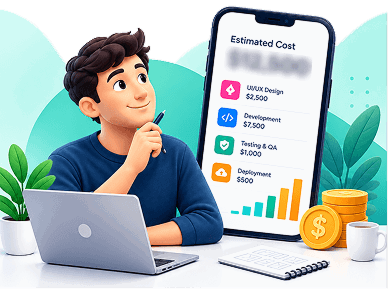
The cost to build an AI avatar therapy app runs from about $20,000 to $150,000 or more. Each session also has a running cost. This cost estimation of an AI avatar therapy app is a planning range for design, build, and basic testing, not quotes. It leaves out clinical trials, FDA submissions, and yearly upkeep. The cost vary by region and team.
|
Tier |
Development budget scope |
Timeline |
Build cost |
|---|---|---|---|
|
Wellness MVP |
Text and voice, stylized avatar, basic safety layer, one platform |
3 to 5 months |
$20,000 to $45,000 |
|
Clinician-supervised |
Adds clinician dashboard, audit logs, HIPAA-ready setup, integrations |
5 to 8 months |
$45,000 to $90,000 |
|
Clinical-grade |
Adds validated protocols, deep testing, regulatory support |
8 months or more |
$90,000 to $150,000+ |
These factors move the development budget of an AI avatar therapy app:
- Safety layer. One quote has crisis classifiers, session monitoring, and red-teaming. Another has keyword matching only.
- Avatar quality. A stylized 2D character costs far less than a realistic face, 3D, or XR.
- Build or rent. A rented avatar platform is cheaper to build. A custom stack costs more now and less per minute later.
- Compliance and security. HIPAA setup, penetration tests, and legal review add cost.
- Platforms and integrations. iOS, Android, web, EHR links, and wearables each add scope.
- Clinical input and evidence. A part-time advisor costs less than clinicians embedded through the build and an independent study.
- Scope changes. A feature added mid-build, such as a second language, resets the estimate.
- Upkeep. Model updates, security reviews, and new state rules commonly add a share of the build cost each year.
- Team and region. A low hourly rate is not a low total if rework follows.
Tools and Tech Stack for Digital AI Avatar Therapy App Development
A tech stack for building an AI avatar therapy app has ten parts. The choice that shapes the rest is build or rent. For a first launch, rent the avatar rendering and streaming, and own the language layer, the safety layer, and your data. Here is what each path does to privacy, cost, and control:
- Privacy: your own stack keeps audio, video, and text where you choose. A platform adds vendors, and each must sign a BAA, not train on your data, and delete on request.
- Cost: a platform starts fast but bills per minute, which hurts with heavy users. Your own stack costs more to build and less per minute.
- Control: your own stack controls look, delay, and data location. A platform follows its vendor’s roadmap and pricing.
- How to decide: piloting with one clinic, plug in. Selling to a health system with strict data rules, own more or use private deployment. Expecting heavy daily use, build against your own interface so you can swap avatar vendors without a rewrite.
Let’s now take a look at the tech stack table.
|
Layer |
Common options |
Check before you pick |
|---|---|---|
|
Language model: writes replies from your protocol and memory |
OpenAI, Anthropic Claude, or Google Gemini through Azure, AWS Bedrock, or Vertex AI; Llama to self-host |
Signed BAA, no training on your data, data region |
|
Speech to text: turns live audio into text |
Deepgram, Azure Speech, AssemblyAI, self-hosted Whisper |
Streaming, accent accuracy, BAA |
|
Text to speech: creates the voice |
ElevenLabs, Azure Speech, Amazon Polly, Cartesia |
Streaming, voice rights, BAA |
|
Avatar rendering: draws face and lips |
HeyGen LiveAvatar, Tavus, D-ID, Anam; Unity or Unreal for custom 3D and XR |
First-frame time (vendors quote roughly 180 to 300 ms), data retention, HIPAA terms |
|
Real-time transport: carries audio and video |
WebRTC with LiveKit, Daily, or Agora |
Region hosting, encryption |
|
Safety layer: crisis detection and output checks |
Custom classifiers, rules engine, Llama Guard, NeMo Guardrails |
Test against your protocol |
|
Protocol content store: approved clinical content |
PostgreSQL with pgvector, Pinecone |
Clinician sign-off |
|
Backend and data: orchestration, memory, logs |
Python or Node.js, PostgreSQL, Redis, AWS, Azure, Google Cloud |
Encryption, audit logs, retention |
|
Login and monitoring |
Auth0, AWS Cognito, Datadog, Sentry, OpenTelemetry |
MFA, crisis-event alerts |
|
App: the user’s screen |
Swift, Kotlin, Flutter, React Native |
Mic permissions, weak networks |
A BAA is usually offered on enterprise or API tiers and coverage varies by service. Get it in writing for each vendor. You can ask where audio is processed and how long it is kept. Test two avatar vendors on your own network for a week before you commit, and compare first-frame time and uptime.
Emerging Trends in AI Avatar Therapy Apps for 2027
These trends will shape AI avatar therapy apps in 2027, and the wider future of AI therapy apps. They point one way: products that add safety and proof will last. These are the main AI avatar mental health app trends. You can use them to set your roadmap and your questions for vendors.
1. From text chat to live video and voice avatars
Voice and live video are replacing text as the default. Faster streaming models minimizes delay, so talking to an avatar feels less robotic. Text will stay as a fallback. Live video also raises consent questions for recording. Users will compare every new avatar to the fastest one they have used.
2. Immersive XR therapy and spatial computing
Headsets let apps like XAIA put an avatar in a calm 3D space. Hardware cost will likely keep XR in clinics and research through 2027. Apple Vision Pro costs about $3,500, which limits who can use it. Studies so far are small, so treat XR as a clinic channel first.
3. Hybrid care: clinician-in-the-loop as the safe default
Most authorized digital mental health products are cleared as adjuncts to clinician-supervised care. Illinois and Nevada draw the same line: AI supports, a licensed human leads. It is also the easiest model to defend to regulators and buyers. Expect a therapist dashboard and a handoff path to become standard.
4. Regulation shaping product design
Will rules end AI therapy apps? No. They push them toward disclosure and human oversight. In early 2026, 36 states introduced more than 70 chatbot bills, most requiring AI disclosure. You can build disclosure and crisis protocols into the product, and keep a living list of rules by launch state.
5. Condition-specific, evidence-backed products over generic companions
Therabot’s trial tested a CBT tool for defined conditions. Buyers and regulators favor that over open-ended companions. A scoping review of avatar research found most results rest on satisfaction and engagement. Products that report outcomes will stand out. You can choose one condition and go deep before you widen.
6. Safeguards for teens and vulnerable users
In September 2025 the FTC sent orders to seven companion chatbot firms about child safety, testing, and monetization. Expect age checks, parental controls, and limits on emotional dependence. If you cannot protect minors, say the app is for adults and enforce it.
7. Multilingual and culturally adapted avatars
Models speak many languages, but therapy is cultural. Expect avatars tuned for idiom, family norms, and stigma, and tested with the groups they serve. Test speech recognition on accents, since errors can hide distress. Hire clinical reviewers in each language you launch in.
8. Privacy-preserving and on-device processing
Running speech on the phone keeps raw audio off servers and cuts breach exposure. Smaller models are less capable, so expect hybrids: on-device audio, cloud reasoning. You must ask every vendor where audio is processed.
9. Independent evaluation, audits and outcome reporting
Buyers will ask for proof. Third-party safety tests, red-team reports, and published outcomes will separate serious products from companions. You should plan an outside review before you sell to health systems.
Challenges and Risks in AI Avatar Therapy App Development and How to Solve Them
Most AI avatar therapy app challenges, and the wider AI avatar therapy app development challenges, come down to safety. You have to take these challenges into consideration and also their possible solutions.
1. Missed crisis cues and failed escalation
Crisis language is rarely direct. People write “I am so tired of everything,” and keyword lists miss it. Speech errors make it worse.
Solution: AI mental health avatar therapy app safety needs layered crisis detection AI: rules plus a trained classifier on every message, an output check, and a session risk score. The development team hard-code the response so the model never improvises. They build a crisis test set with clinicians, and block any release that fails it.
2. Hallucinated or harmful therapeutic advice
Language models state wrong things with confidence, including medication or diagnosis advice.
Solution: Limit it to approved protocols and vetted content, add refusal scripts for diagnosis and medication, run an output check before speech, and review a sample of real chats each week. Log every reply so you can trace a bad one.
3. Emotional dependency and parasocial attachment
An avatar that is always warm and always available is easy to lean on, and engagement metrics can quietly reward that.
Solution: Treat session length and streaks as risk signals, not wins. Developers can add session caps, break prompts, and handoffs to human care. Send heavy-use reports to a clinician.
4. Worsening of symptoms in vulnerable users
Some users get worse, and the avatar is the only one watching.
Solution: The development team track mood with short check-ins across sessions, and set a threshold that alerts a clinician or shows human help. Screen at sign-up and keep high-risk users out of the wellness tier.
5. The uncanny valley and trust
A near-real face with off lip sync or a blank stare feels creepy, and trust drops fast.
Solution: Use a stylized character, drive lip sync from the audio, add small idle motions, and test with real users for discomfort.
6. Latency and cost at scale
Stages that run in a row make the avatar slow, and per-minute fees grow with usage.
Solution: Stream every stage, use a small model for simple turns, cap session minutes, offer voice-only mode, and track cost per session weekly.
7. Bias and cultural competence
Speech and language models work worse for some accents and languages, so distress goes unheard.
Solution: test with speakers from each target group, compare error rates, swap or tune the speech model, and add clinicians from those communities to review.
8. Privacy and breach risk for sensitive data
Voice, video, and chat logs are sensitive, and every vendor in the pipeline adds risk.
Solution: Collect less, encrypt in transit and at rest, delete audio after transcription, sign business associate agreements, restrict staff access, and keep audit logs.
9. Clinical validation burden
Clinical claims need proof, and proof takes time and money.
Solution: Set outcome measures before the pilot, use a comparison group where you can, get independent review, and keep marketing inside what you tested.
10. Safety for minors
Teens use apps built for adults, and state laws treat minors differently.
Solution: add an age gate, parental consent where required, and a limited or blocked experience for under-18 users until you build a protocol for them.
Legal and Compliance Requirements for AI Avatar Therapy Apps in the USA
These are the legal requirements for AI avatar therapy app development in the USA. AI avatar therapy app regulations differ by state, and any creation of an AI avatar therapy app needs a plan for each and should start here.
The state patchwork: outright bans, disclosure rules and pending bills
Is AI therapy legal? It depends on the state. Illinois bans AI therapy unless a licensed professional is involved, with fines up to $10,000 per violation. Nevada did the same and extended it to schools. Utah allows chatbots that disclose they are AI and protect user data. Tennessee, Colorado, and Maine added limits in 2026. Check every launch state, and recheck before each release.
Wellness, clinician-supervised and regulated-device positioning
|
Position |
What it means |
Main exposure |
|---|---|---|
|
Wellness |
Skills and support. No diagnosis or treatment claims. |
State bans if sold as therapy, FTC claims, privacy law |
|
Clinician-supervised |
A licensed clinician directs and reviews. |
Licensure, HIPAA, liability |
|
Regulated device |
Claims to diagnose or treat a condition. |
FDA premarket review and clinical evidence |
1. FDA: where a wellness avatar becomes a medical device
FDA oversight depends on intended use, autonomy, and risk. Generative AI that treats or diagnoses a psychiatric condition, or stands in for a provider, falls under FDA review. Your marketing and in-app claims set your intended use. One report notes that none of the FDA’s AI-enabled devices is authorized for mental health, and that the first patient-facing LLM device cleared kept the model away from the decisions.
2. HIPAA and health data privacy
HIPAA compliant AI avatar therapy app development starts with one question: are you a covered entity or a business associate, for example when you serve a clinic? If yes, you need a risk analysis, access controls, encryption, audit logs, and a business associate agreement with every vendor that touches data, including the model, speech, and avatar vendors. HHS does not certify products as HIPAA compliant. Consumer-only apps may sit outside HIPAA but still face FTC rules and state laws such as Washington’s My Health My Data Act.
3. FTC rules on deceptive claims and marketing language
Do not call the avatar a therapist or doctor. Do not promise results you cannot prove. Claims need proof before you publish them, not after. Review ads, app store text, and avatar scripts for phrases like clinically proven or therapist-level care. The FTC opened an inquiry into companion chatbots in 2025. Health apps outside HIPAA can also fall under its Health Breach Notification Rule.
4. Minors, consent and AI disclosure
Tell users they are talking to AI. California’s SB 243, effective January 2026, adds duties for known minors, suicide protocols, and annual reporting from July 2027. Get consent for voice and video data. COPPA covers children under 13, and parental consent rules vary by state, so confirm each launch state.
5. Licensure, liability and insurance
Posing as a licensed provider invites claims. Pennsylvania sued Character.AI for unlicensed practice of medicine, and about a dozen product-liability cases over chatbots and self-harm sit in one San Francisco court, per one report. Carry professional liability, tech E&O, and cyber cover. Document that your avatar does not diagnose or write treatment plans, and that users are told so. Have a lawyer review your terms.
Monetization Strategies for AI Avatar Therapy Apps
How do mental health apps make money? Through the monetization models below. You can choose one main model for your AI avatar app revenue model and one backup. AI therapy app monetization fails when a plan suits casual users but not daily ones, so price by minutes or cap use. Let’s take a look.
1. Consumer subscription and free introductory minutes
Charge monthly and give a few free minutes to try it. Also, add a fair-use cap on minutes so one heavy user cannot erase your margin. You can offer a discounted annual plan to improve retention. Set free minutes low enough to protect margin and high enough to show value.
2. Usage-based minute packs
Sell minute bundles so revenue tracks cost. You can offer a cheaper voice-only or text mode. The risk is that users ration minutes when they need support most, so keep crisis help free. Show users a clear minutes counter.
3. Employer and EAP licensing
The next way to monetize your AI avatar therapy app is by charging per active user, not per eligible employee, to match your cost. Employers want use reports with no individual transcripts. Sales cycles run long, so offer a small pilot first.
4. Clinic and practice licensing or white label
Charge per therapist seat or per client. White label lets a practice use its own brand. It fits the clinician-supervised model. You can plan for support costs, and offer a starter tier for solo practitioners.
5. Payer and provider partnerships
Health plans and systems may pay if you show outcomes and safety data. Expect slow deals and a need for clinical-grade evidence. Payers will also ask who is clinically responsible when something goes wrong. Aim for these deals once you have a published pilot.
6. Training and simulation licenses for therapist education
Universities and training programs pay license fees for patient-simulation avatars. Regulatory risk is lower and revenue is steady. Sell it as an annual license per program or per student seat. You can add analytics so educators can track progress.
Why Choose Owebest Technologies to Build an AI Avatar Therapy App?
Owebest Technologies is one of the best AI avatar development companies that works with founders, clinics, and coaches who want to launch an AI avatar therapy app the right way. We plan the rules, the safety checks, and the legal groundwork first, then build the avatar on top of them. When you compare AI avatar development companies, this order of work is worth asking each one about.
What You Get When You Work with Owebest Technologies
- A Clear Product Brief Before Anything Else: We thoroughly discuss the requirements and settle what the avatar is: a wellness companion, a clinician-supervised tool, or a regulated product. You leave with a one-page brief that every later decision follows.
- Safety Rules That Cannot Be Talked Around: We build crisis detection, reply checks, and human handoff outside the AI model. A clever message from a user cannot switch them off.
- Your Experts Stay in Charge of the Clinical Side: Your advisor decides what the avatar may say and what it must refuse. We turn those decisions into working features and keep a record of every safety event.
- A Conversation That Flows: Listening, thinking, and speaking run together instead of one after another. The avatar starts answering while the reply is still being written, so the pause stays short.
- Room to Grow Without a Rebuild: The avatar vendor can be swapped later without touching the rest of the app. Your heaviest users are planned for from the start, not discovered after launch.
- A Written Plan Before You Commit: You see the scope, the build steps, and the estimate on paper first, so you can decide with full information.
A Real Project, in Short
A group therapy practice with six clinicians came to us with a common problem: clients did well in sessions, then went quiet for the week. The practice wanted an avatar that could check in between visits without replacing any therapist.
We built a clinician-supervised app with a stylized avatar, voice check-ins, and a library of CBT exercises approved by the practice’s lead psychologist. Crisis detection ran on every message, and any flagged conversation sent an alert to the clinician on call. Each therapist also got a simple dashboard showing mood trends and homework status before the next session.
In the first three months of the pilot, about 7 in 10 clients completed at least one check-in a week, and therapists said they spent less session time re-collecting what had happened since the last visit. No safety event was missed in the review of sampled chats.
If you already have funding and a clinical advisor, you have what you need to begin. Consult with Owebest Technologies, an AI development company, and we will map out the right scope for your AI avatar therapy app.
Conclusion
A good AI avatar therapy app starts with a clear product position, a clinical advisor who writes the rules, and a lawyer who checks them before code. You should build the safety layer first and stream every stage so the avatar feels natural. Model voice costs for your heaviest users. Treat the avatar as a bet you test.
An avatar is only worth testing if users trust it. Rules around AI and mental health will keep changing, so build disclosure, consent, and clinician oversight into your AI avatar therapy app development from day one. Get that foundation right, and you have something worth building on.
You have funding and a clinical advisor. The next step is a scoped plan. Consult with Owebest Technologies about your AI avatar therapy app idea, and get a clear scope, a safety-first build plan, and an estimate before you commit.
Frequently Asked Questions
Yes in most states, if you position it correctly. Illinois and Nevada ban AI therapy outright. Utah requires disclosure and data protections. Wellness and clinician-supervised designs are the safer routes. You must check each launch state with a healthcare lawyer, because rules are changing fast.
A text chatbot works through typed messages. An AI avatar therapy app adds a voice and a face, so it needs speech tools, rendering, and low delay. The reply logic can be the same. The avatar adds cost and trust risk. Proof that a face improves outcomes is limited.
No. Current evidence supports AI as support alongside human care. Illinois and Nevada bar AI from acting as a therapist. Position your avatar as support, with clinician oversight and crisis escalation to a human.
A wellness avatar that does not diagnose or treat is generally outside FDA device rules. If it claims to treat a condition or replaces a provider, it can be a medical device. As of mid-2026, no generative AI product has been authorized for mental health.
The cost to develop an AI avatar therapy app ranges between $20,000 to $150,000 or more. A wellness MVP sits at the low end. A clinician-supervised product sits in the middle. Clinical-grade products cost the most. Also, the running costs are extra, and avatar streaming is billed per minute.
These are typical ranges that vary based on your project requirements. A wellness MVP often takes about 3 to 5 months. A clinician-supervised product often takes 5 to 8. Clinical-grade products take longer because of testing and evidence work.
If you are a covered entity or business associate, you need a risk analysis, access controls, encryption, audit logs, breach notification, and business associate agreements with every vendor that handles health data. HHS does not certify any product as HIPAA compliant.
It checks the user’s words, and sometimes voice, against crisis rules and classifiers before and after the model replies. A signal triggers fixed crisis scripts, 988 details, and a human alert where set up. No system catches everything, so test often.
You should start with stylized. Realistic faces cost more, risk the uncanny valley, and no strong evidence shows they help people open up more. Test both with a small user group later if you can.
Yes, if you design for it. Build clinician review, audit logs, consent, and data controls into the architecture now and watch your claims. Marketing a wellness product as treatment can push it into FDA or state-law territory.