










Native vs Cross-Platform Apps: Which Should Businesses Choose?
.jpg)
In 2026, mobile apps are at the core of digital transformation. With global mobile app revenue expected to exceed $935 billion and growing rapidly, businesses can no longer afford poor technology decisions.
However, when it comes to mobile apps, one of the most common questions business owners face when developing a mobile app is whether to go with native or cross-platform development. However, the right choice usually depends on some of the latest trends and more on your business goals, budget, timeline, and long-term vision.
In this blog, we break down the differences between native vs cross platform app development to help you choose the right strategy while meeting your business goals.
An Overview of a Native App
In the case of native mobile app development, it is specifically developed on a single platform, such as iOS or Android. While iOS apps are typically developed using Swift or Objective-C, Android apps use Kotlin or Java. These apps are designed to fully align with the operating system they run on.
Native apps ensure -
- Smooth performance
- Polished user experience
- Strong reliability
According to industry data, Native apps hold almost 52.3% market share in 2025, which signals their strong acceptance and superior performance in the market. The number also highlights the overall importance of ensuring certain performance- based scenarios.
An Overview of a Cross Platform App
A cross-platform app is also developed using a single codebase that runs on multiple platforms, usually iOS and Android. During cross platform app development, developers need to write code once, and then they can easily deploy the code across platforms with minimal adjustments.
Businesses, when they opt for cross-platform development, can expect faster time to market and reduced development costs.
Cross-platform apps ensure -
- Consistent UI/UX
- Faster development cycle
- Easier maintenance
Similarly, among the cross platform app development benefits, it allows almost 70% to 90% code reuse across platforms like iOS and Android as per multiple sources.
Native vs Cross-Platform: What Are the Key Differences
When comparing native vs cross platform app development, businesses need to evaluate different factors beyond just the cost. Below is a table where we mention all the key differences properly.
| Factor | Native Apps | Cross-Platform Apps |
|---|---|---|
| Performance | Superior speed and optimized for device hardware | Near-native performance. Sometimes, may lag slightly in high-performance scenarios |
| Development Cost | Higher cost (30–50% more) due to separate development for each platform | More cost-effective due to shared codebase |
| Time-to-Market | Slower development as apps are built separately for iOS and Android | Faster launch with a single codebase across platforms |
| User Experience (UX/UI) | Highly optimized, platform-specific UI/UX (better user engagement) | Consistent UI/UX across platforms but less tailored to each OS |
| Maintenance | Requires separate updates and maintenance for each platform | Easier maintenance with one codebase for all platforms |
Cost Comparison: Native App Development vs. Cross Platform
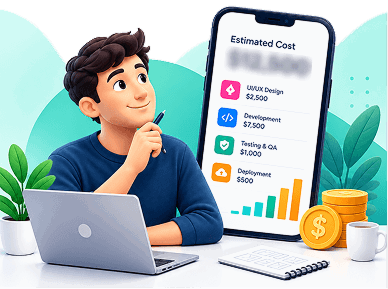
Owing to platform-specific developments, the native mobile app development costs are usually high. However, when you proceed with cross-platform mobile app development, the cost is lower because of the shared codebases. Considering the cost-friendliness and scalability, businesses often tend to hire affordable mobile app development in India.
| Cost Factor | Native App Development | Cross-Platform Development |
|---|---|---|
| Initial Development Cost | $50,000 – $250,000+ for a single platform. | The cost may range between $25,000 – $150,000 depending on the app’s complexity |
| Average Project Cost (2026) | Typically $60,000 – $300,000+ for multiple full-scale apps | It requires almost 25%–50% cheaper than native app development |
| Time Investment | Longer development cycles | Faster development, which reduces overall project cost |
| Maintenance Cost | 15–20% of initial cost per platform | Lower maintenance costs due to single codebase updates |
| Total Cost for Complex Apps | The final price may exceed $400,000 – $500,000+ for enterprise level apps | Typically remains lower even for the complex development |
| Long-Term Cost | Always higher due to ongoing platform-specific updates | More cost-efficient because of centralized maintenance |
Native vs. Cross Platform: Which Option Fits According to Your Business Goals
Choosing between native and cross-platform depends on your business goals, budget, and timeline. Each approach offers unique advantages, making it essential to align technology decisions with your app’s purpose.
1. When Native Apps Are Suitable
If your business needs a highly functional mobile app with complex features, deep integration with device hardware, and great performance, hire a custom mobile app development company in India. Their expertise would be the best choice for your business.
Such an app is also ideal for a large user base, long-term growth plans, and to provide a seamless user experience.
2. When Cross Platform Apps Are the Better Choice
Among the cross platform app development benefits, this is ideal for startups, particularly for small to mid-sized businesses, and for those companies that launch MVPs. If speed to market and ultimate cost efficiency are top priorities of your business, this approach makes sense.
Hybrid Approach: How to Choose Between These Two
It is a fact that many modern businesses have already adopted a hybrid strategy that perfectly combines the strengths of both native and cross-platform approaches.
- In the case of Native models, some core features are developed using cross-platform frameworks. Some performance-intensive components also ensure optimal performance without sacrificing the overall cost efficiency.
- Furthermore, the hybrid approach is also ideal for scaling modern businesses that need greater flexibility while maintaining overall performance standards.
In the case of mobile app development services in India, a hybrid strategy helps companies balance cost, speed, and performance effectively.
What Are Some Latest Future Trends in Mobile App Development
When it comes to opting for mobile app development approach, the landscape continues to evolve rapidly, particularly driven by new technologies and better user expectations.
Some Key Trends Shaping 2026 include:
- Artificial intelligence and machine learning are both the latest technologies that have come a long way, where AI has evolved from simple chatbots to predictive analysis and personalization.
- The widespread adoption of 5G ensures faster data speed, lower latency with enhanced performance. This successfully enables different complex functionalities like real-time streaming and better IoT connectivity.
- Leveraging the power of IoT, businesses are also creating smart home systems, the latest wearable technology, and AI-connected cars.
Conclusion
Choosing between native vs cross platform app development depends on your core business goals, budget, and technical requirements. While some native apps offer unmatched performance and excellent user experience, cross-platform apps provide greater speed, cost savings, and scalability.
Hence, keep these aspects in mind and partner with experts like Owebest Technologies for the best mobile app development service. Build an excellent mobile app that delivers real business value and allows you to stay competitive.