





Top 10 Frameworks and Tools to Build Progressive Web Apps
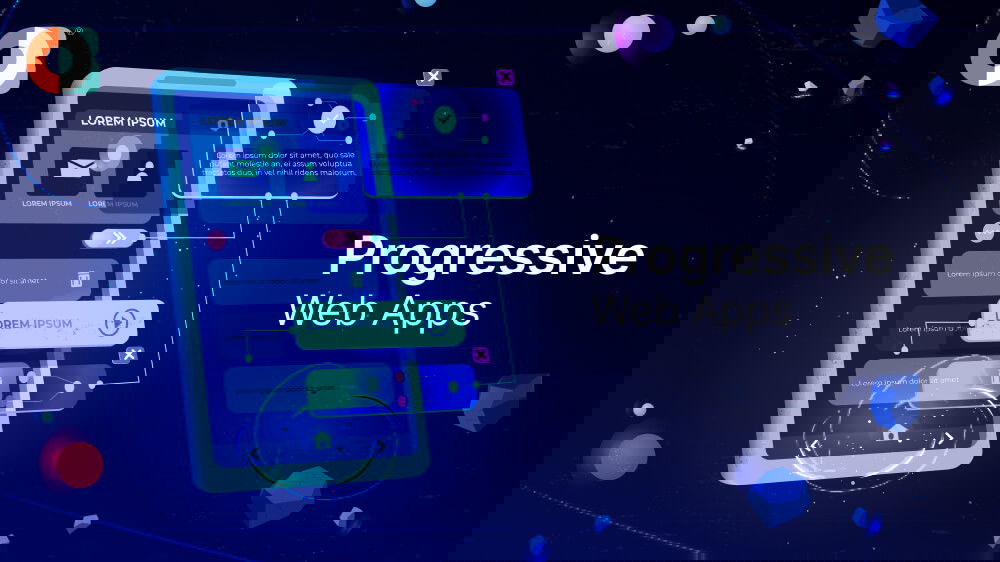
Businesses are evolving with each passing day and using the latest trends and technologies. One of the key ways to stay ahead in the business is to launch progressive web apps that can help grow companies.
During the second quarter of 2024, consumer spending for mobile apps increased to USD 36.2 billion. The increasing demand for seamless and easy-to-use applications has boosted the development of progressive web apps.
However, the best mobile app development company uses the progressive web app frameworks and tools to build progressive web apps.
Top 10 Progressive Web Apps Frameworks
Progressive app frameworks will play an essential role in the development of the apps. Ensuring that the proper framework is being used for your business app is extremely important. This helps in ensuring efficiency and familiarity. Some of the top PWA frameworks used by the mobile app development company include the following:
Iconic
Iconic is one of the top open-source SDKs, and it was launched in 2013. It is based on the Angular and Apache Cordova frameworks. Around 5 million hybrid progressive web apps have been developed using this technology. Iconic has a massive library of different components, which is suitable for Android and iOS devices.
Iconic has a very small learning curve, ensuring beginners can use it efficiently. It can function within the device browser with the help of WebView. Since Iconic is an open-source platform, the app development cost usually becomes less while using this PWA framework. Moreover, Iconic has many built-in browser instruments that are essential for faster and easier maintenance. Iconic also features an extensive plug-in library so that developers can access APIs.
Pros- Helps with hybrid web app development.
- No coding is required to drive APIs from the library.
- Debugging tools help in easy maintenance.
- Recent updates may need some changes to drive the fix.
AngularJS
Launched by Google in 2010, AngularJS is one of the oldest progressive web app frameworks. AngularJS has better and more advanced offerings than the other progressive app frameworks. Although there's a learning curve, you won't have to struggle much once you understand the concept. The modular Angular components ensure compatibility with different web frameworks and tools.
The mobile app development company often uses AngularJS for front-end development. With this framework, developers will not have to perform repeated tasks. The exceptional compilation system of AngularJS plays an essential role in smooth, progressive web app development. This allows the app to function correctly with the JavaScript code and eventually operate the application.
Pros- The methods are explained very clearly.
- The components are modular.
- Augmented with high speed and security, maintaining the unique AOT concept.
- The learning curve is slightly complex.
- You must know Typescript before using this method.
React
React is a prominent PWA framework bringing forth the touch of a 'Create a new React app' producer. All the creatives for creating the PWA are available as a novel measure for the app. React was launched by Facebook in 2013 as a JS library to create an interface scheme. As one of the leading libraries, it is mainly used for front-end web development.
React is used to develop single-page and multi-page applications with content. It can also be effective for loading and shifting within the district page. The broad JavaScript library is what makes React popular. The platform uses JSX for connecting with HTML.
Pros- A large community of developers are available.
- Provides scalability.
- Reasonable learning curve with virtual DOM.
- Slightly complex.
- Users must know JSX to use React.
Polymer
Yet another launch by Google is the very popular Polymer. As one of the top progressive web app frameworks, Polymer has a variety of components, templates and different development tools. Considering the simplified mode, Polymer is a highly efficient voice for PWA. There are tools and components within this app framework.
A variety of browsers support Polymer. Polymer contributes to accessibility and adaptability. It largely relies on JavaScript, HTML, and CSS, making it an autonomous PWA framework.
Pros- It supports various web app stacks like routing, data tier layouts and responsiveness.
- Has a straightforward API.
- It comes with browser-embedded building tools, which help with debugging tools.
- Low SEO-friendliness leads to high reloading time.
- No authorized IDE.
Svelte
Svelte is one of the top JavaScript-based frameworks with a wide range of user interfaces. Svelte is very easy-to-use and lightweight, coming with various small code bundles, allowing faster load time. The developer teams can leverage the progressive web app frameworks, which help with better web development.
Using Svelte can be highly beneficial for maintaining proper user interfaces. Furthermore, Svelte can also help develop PWAs because it is optimized for better performance and high-level interactivity.
Pros- It helps in creating numerous lightweight applications.
- Has a better learning curve.
- The small code bundles ensure faster download time.
- There is no Virtual DOM.
- Svelte is not that flexible for app development.
Vue.js
VueJS shares many similarities with React for being one of the top progressive web app frameworks using Virtual DOM. The use of Virtual DOM helps in better representations of the real DOM. Vue is constantly improving every day with the use of the latest technologies like CSS and HTML. On the other hand, React primarily relies on JavaScript.
VueJS is slightly complicated, so developers may have difficulty coping with it in the initial stages. This PWA framework offers high-speed rendering and simplistic coding, contributing to better coding information. As a result, app development becomes more effortless.
Pros- The documentations are sorted.
- It can be merged with JSX and TypeScript to achieve the best outputs.
- Simple coding features make it easier to use for beginners.
- The support team is tiny.
- Too much flexibility can sometimes mean trouble.
ScandiPWA
ScandiPWA is an open-source Progress web app framework which functions in the same manner as Magento PWA Studio. Therefore, developers can create the PWA with the help of the Magento eCommerce platform. ScandiPWA is essential in providing everything you need to make things like deploying and managing the PWA.
ScandiPWA consists of a wide range of user interfaces and data management. Furthermore, it also helps with testing the applications. Therefore, using ScandiPWA can play an essential role in ensuring that the app is updated.
Pros- Developers can use the existing Magento infrastructure.
- A variety of tools are available.
- It helps to keep the apps updated.
- Some of the interfaces are small.
- It can have a negative impact on discoverability.
Lighthouse
Google developed Lighthouse to improve the quality of web apps. The progressive web app framework measures websites via multiple factors to enhance their performance. It will measure the digital offerings to implement and improve the process, As the leading progressive web app framework, it will measure different frameworks and tools. Furthermore, the experience and framework help in enhancing the web apps. Moreover, it also plays an essential role in ensuring timely project delivery.
Pros- It helps to improve the quality of web pages.
- It comes with actionable insights that help to identify areas for improvement.
- The Lighthouse is very easy to use.
- There is a considerable risk of misinterpretation.
- Real-world context is minimal.
Magento PWA Studio
Magento PWA Studio is one of the top progressive app frameworks that use the Magento eCommerce platform. This platform will allow you to create, deploy and manage the PWA, including various components like managing data, testing applications and developing user interfaces.
Using the Magento PWA framework means you can also leverage Magento's existing eCommerce infrastructure, saving time and effort. Magento PWA Studio also comes with a wide range of tools that, when updated, can run smoothly.
Pros- A variety of tools are available to manage PWA.
- Saves time and effort through the existing eCommerce infrastructure.
- Updates the app regularly.
- Limited customization options are available.
- Extensive coding can pave challenges for third-party extension integration.
PWABuilder
PWA Builder is a community-led, open-source framework launched by Microsoft. This framework is compatible with both iOS and Android for application development. PWA Builder is one of the easiest ways to develop elements that can efficiently perform against other platforms and devices.
PWA Builder plays an essential role in transforming sites to make them engaging and functional for all the manifold platforms. PWA Builder can help in cross-platform development across various platforms such as Microsoft Store and Mac. However, automation through these platforms can be difficult.
Pros- It has an intuitive building process.
- PWA Builder uses Vue for app development.
- The Microsoft team supports this platform.
- Automation through this medium can be complex.
Conclusion
Progress web app frameworks have become highly beneficial in determining the growth of businesses. However, it is essential to hire Android developers who can understand the critical components of your app. Following the exemplary aspects can be important in meeting the chief critical steps. The proper framework contributes to the development of user-friendly, scalable and responsive apps. You must find the best mobile app development company that understands your needs. Owebest is a trustworthy mobile app development company that helps you achieve the best results with the right mobile app development. Contact Owebest for web app development.