

Choosing the Right Tech Stack for Your eCommerce App
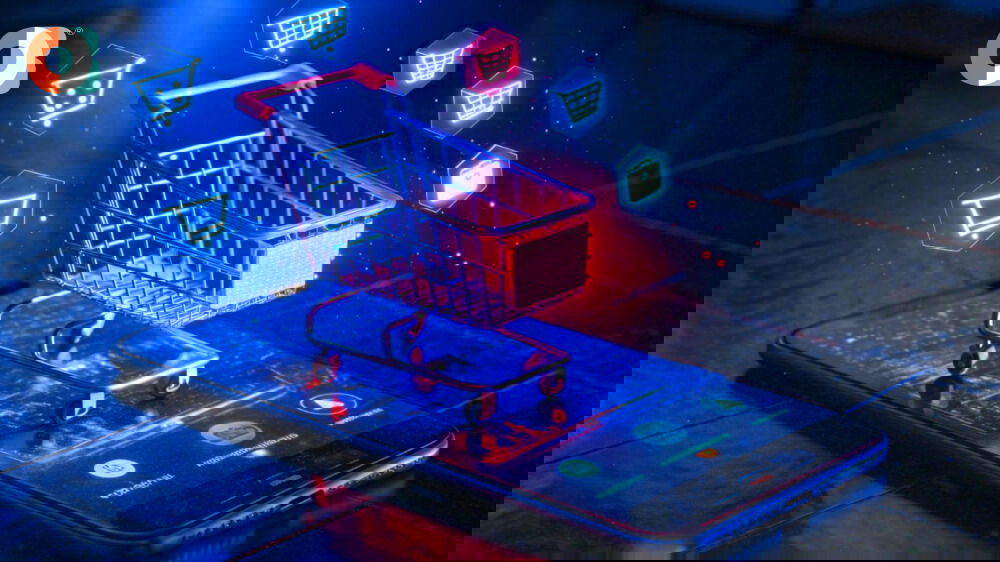
The making of an eCommerce app would be exciting, right? However, the difficulties come when it's time to choose the right tech stack. It can make a huge difference in the online store performance, speed and scalability.
You may not be aware of the fact, but a lot of businesses die just because they begin with the wrong technology. But, there is nothing to fret about, this blog will help you to select the best tech stack for eCommerce app. This way, you will be able to design your store while keeping long-term business expansion and smooth user experiences in mind.
What Is Exactly eCommerce Tech Stack?
eCommerce tech stack is the technologies that drive an online store. It covers all of the front-end frameworks to the back-end systems and databases. All the layers are collaborative to maintain a smooth browsing experience, transactions, and data management. The front end is what the users see, whereas the back end takes care of everything that occurs behind the scenes.
By 2025, the world's eCommerce sales were estimated to reach 6.42 trillion, strongly stressing the demand for a strong eCommerce tech stack foundation. Therefore, when it comes to making a selection of the best technology stack for e-commerce, choose wisely. There must be a guarantee of speed, security, and scalability to facilitate a smooth shopping process.
How Can You Choose the Right Tech Stack for Developing Your eCommerce App?
The selection of a perfect eCommerce tech stack depends on a number of factors. So, now it is time to explore the aspects that affect the technology stack to use in the development of e-commerce apps.
Business Requirements Analysis
Whatever your business needs are, analyze them before settling on technologies. Determine your objectives, target customer, projected traffic and capabilities. If you target mobile users, make sure that you have a responsive design.
Choose a technology stack that can be used to achieve your growth goals. Always keep in mind that you should not select what is in trend but what suits your application.
Integration with Current Systems
When choosing technologies to use in your eCommerce application, ensure that they are compatible with your current application. An appropriate stack eases integration, minimizes re-development and eliminates data silos.
It also simplifies the work and makes the communication between the tools easier. In this manner, you would be able to maximize efficiency at a minimal cost of investment in existing technology.
Assessing Project Scale
The scale and complexity of your eCommerce project are considered essential factors to determine the eCommerce tech stack. Small sites may utilize minimalist frameworks to develop in a short amount of time.
When dealing with larger platforms with large product lines and high traffic, full-fledged back-end providers are the best. They include Node.js, Django, or Ruby on Rails coupled with scaled databases such as PostgreSQL or MongoDB. They will guarantee performance, reliability and easy expansion as your platform increases.
Ensuring Speed and Growth
An eCommerce app must be capable of managing increased traffic and the load of transactions as your business grows. Slow and crashing apps may result in the loss of customers, whereas expeditious and dependable platforms keep the attention.
So, the choice of technologies that are high-performance and scalable will mean that your application can expand both easily and efficiently. In the future, it will be able to handle growth, and offer a smooth user experience.
Take into account Skilled Developers
When selecting a tech stack as the infrastructure to use in your eCommerce application, you must look at the list of developers available. The use of common technologies that have a good pool of talent makes the development process easier.
This way, your hired eCommerce development company can efficiently work with the development process better. They will be able to meet the deadline and ensure high-quality development without delays and a shortage of resources.
Prioritizing Security
Security is an imperative aspect in the development of apps in e-commerce. It is because apps handle personal sensitive information of customers such as payment and personal details. So, you must select the technologies that can be used to ensure a high level of security.
Also, observe safe coding and conduct security tests on a regular basis to make sure that third-party services are subjected to stringent security rules. These measures actually guide you to ensure protection of customers against potential attacks.
Focus on User Experience
The tech stack should be chosen keeping the convenience and easy shopping experience in mind. Choose front-end frameworks such as React, Angular, Vue.js, or Next.js to create interactive and easily navigable interfaces.
Ensure that the stack is strong enough to enable essential functions. They include product filters, search capability, and mobile-responsive designs as they ensure a smooth user experience.
Connection with External Services
Current e-commerce systems tend to be based on the use of third-party applications. They are payment processors, customer relationship management systems, and analytics applications.
So, it is crucial to select an eCommerce tech stack that can be easily integrated with APIs and that will be compatible with such external services. This will guarantee efficient running, increase functionality and consistency of performance throughout your platform without technical snags.
For related planning, Full Stack Development explores the next practical step, while MERN Stack Development adds a complementary view on technology, delivery, and feature decisions relevant to this topic.
Popular Tech Stack for Making an eCommerce App
In order to develop a robust eCommerce application, one needs to choose the most optimal eCommerce tech stack. Different stacks are applicable to different project needs, both in small startups and large companies. So, these are some of the trusted tech stacks that are common in the development of e-commerce.
MEAN Stack
MEAN stack comprises MongoDB, Express.js, Angular, and Node.js. It is best suited for the construction of scalable eCommerce applications with high performance. Angular is used to deal with the front end.
The server is addressed by the Node.js and the data is saved in MongoDB. Express.js connects the front and the database in an efficient way. The stack is quite appropriate in interactive stores and applications which are dynamic.
MERN Stack
MERN is an acronym of MongoDB, Express.js, React, and Node.js. React is used to make interfaces responsive and easy to use. Express and Node.js process requests to the servers, whereas MongoDB stores product and user information.
This eCommerce tech stack is ideal to support the dynamic eCommerce applications of today. These applications demand high-performance, frequent updates, and a user-friendly shopping experience.
LAMP Stack
LAMP stack comprises Linux, Apache, MySQL and PHP. It is a conventional stack of credible eCommerce sites. Linux gives the environment and Apache processes the web requests.
Then, PHP runs the scripts and MySQL stores the databases. It is efficient, safe, and fits small to medium-sized eCommerce projects with moderate traffic and basic features.
.NET Stack
The .NET Stack uses the Microsoft technologies comprising C#, ASP.NET and SQL Server. It is a very secure and scalable solution that is applicable for developing enterprise-level eCommerce applications.
Developers from an eCommerce development company are able to create bespoke features, add third-party services, and keep solid functions with this stack. It is well-performing and compliant with complex online stores with large traffic.
For related planning, Choosing Right Technology Stack for Classified App explores the next practical step, while MEAN Stack Vs. MERN Stack : A Detailed Comparison adds a complementary view on technology, delivery, and feature decisions relevant to this topic.
Java Spring Boot
Java Spring Boot is applied in developing large, scaled, and secure e-commerce sites. It endorses a microservices framework and works well with relational and NoSQL databases.
Also, it is highly secure, high-performance, and can be developed very fast due to its modular structure. Spring Boot is the most suitable for developing busy online stores that have sophisticated features and expansion opportunities.
Mistakes to Avoid When Selecting Your Tech Stack
The wrong eCommerce tech stack can make the process of developing eCommerce apps slow and unnecessarily expensive. So, know about the mistakes most businesses make to be on the safe side.
Ignoring Business Goals
Implementation of technology without clear business objectives will result in resource wastage and ineffective working and performance of apps. So, always make sure your stack is in line with your goals and target audience.
Overcomplicating the Stack
The excessive utilization of technologies makes the development more challenging to maintain. Hence, always ensure that the chosen stack is very efficient and simple.
Neglecting Scalability
Choosing a stack that is not expandable will cause performance bottlenecks. So, choose something with which you can ensure further traffic and feature expansion.
Avoiding Security Requirements.
Lack of attention to security when selecting the app puts your app at risk of such activities as data breach and payment fraud. So, it is always a wise option to get your hands on the best technology stack for e-commerce that has security features.
Failure to Consider Integrating Requirements
Inability to assess the use of third-party integrations may interrupt the working process and restrict functionalities. So, make sure that it is compatible with key services.
Conclusion
Selecting the best tech stack for eCommerce is the key to the success of any eCommerce app. It affects the performance, scalability, security and user experience. Proper planning and decision-making can be used to develop a platform that can expand comfortably with your business. This helps to meet the expectations of the customers in an efficient way.
In order to do this easily, trust Owebest Technologies to develop your e-commerce professionally with the right technologies. Our team creates high-performing custom solutions that best fit your business objectives.