

How Much Does It Cost to Build an AI‑Powered Fitness App Like Fitbod?
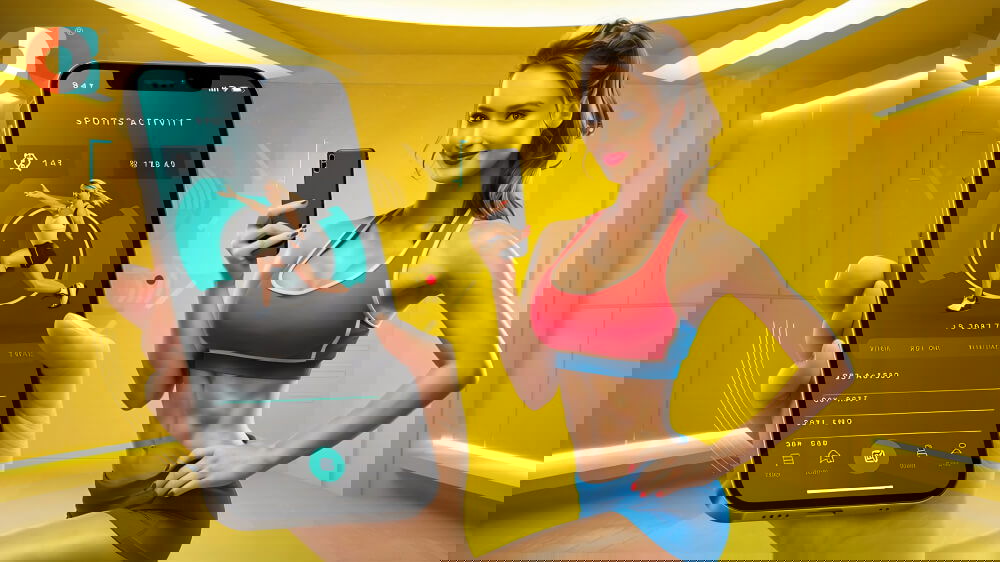
Ever been in a dilemma of which one to follow a personal trainer or app? You are not the only one. In the current competitive world, fitness lovers want to stick to solutions that are convenient yet cannot be excluded of quality. Are you interested in an AI-powered fitness application not without features, such as Fitbod? You know, you are shooting high, and that is your right.
Digital workout logs such as Fitbod are more than apps. They now act as smart personal trainers that have you in your pocket, giving you personalized exercises, progress, change sets according to how well you execute, and even correcting the form in real-time. The leisure of creating highly individualized, data-driven experiences, one that many gym memberships are incapable of providing, is left to AI.
However, creating such a sophisticated application is not all that easy as charging developer and pushing code. Beneath these intuitively flowing interfaces are sophisticated machine learning models, effortless connectivity with wearables, in-real-time analytics engines and a flexible architecture that can go with you as you increase your user base. You also must take into account UX, compliance, long term support and future AI enhancement.
In this guide, we are going to take you through all that is involved in launching an effective AI-fitness application i.e., the features required, technology to be used, trends in the industry, and the project time schedule. And more to the point, how this idea can be realized with the affordable and intelligent-scalable solutions that Owebest Technologies, a proven player in field of artificial intelligence development and services and mobile app development companies, can assist you in bringing your vision into life.
So just what does it take to develop the next generation of digital fitness?
1. The Smart Fitness Revolution
The market of AI fitness is not only increasing but is exploding:
- The number of AI fitness users jumped to 87 million in 2022 and the market is growing at an approximate rate of 33% CAGR through 2028.
- The personalization AI introduced increased user engagement by 40% and 35% more users were retained throughout workouts, which are critical in retention process.
- The utilization of virtual trainers enhanced adherence to exercise by 45% and an artificial intelligence nutrition plan boosted adherence to diet by 40%.
The statistics are obvious the use of AI in entertainment, particularly fitness, being merely a buzzword. It is transforming the habits, raising the performances and driving investment in apps.
2. Must-Have Features: Blueprint of Fitbod-Style Apps
We are not aiming at the exact costs breakdown, but it is necessary that you know what you are creating and what will be delivered line-by-line.
A. Onboarding & Profile Setup
The users are expected to feed in on their levels of fitness, their objectives (strength, endurance, weight loss), the physical body measurements, and requirements (equipment availability). Safe systems, which may be privacy standard compliant, give confidence to the users.
B. AI-Powered Workout Engine
That is the intelligence of the app- monitoring and showing progress, reading rep counts or biometric data, and changing workouts in real-time. Feedback loops that are continuous change routines to match performance and user fatigue.
C. Form Feedback via Computer Vision
AI uses the camera camera on a smartphone for real-time analysis of the exercise form correction of posture and minimization of risks. This is the same as personal coaching but it seems to create value.
D. Wearable & Device Integration
The wearables, such as Apple Watch or Fitbit can be synced with and the heart rate, steps, and recovery are tracked live. Applications compile such data into even greater insights and wiser changes.
E. Progress Tracking & Analytics
The gathering of interactive dashboards allows you to see improvement visuals- performance graphs, strength trend and individual fitness knowledge. This increases motivation and retention.
F. Virtual Trainer & Chat Support
Users are provided with chatbots to form checks, cues, and reminders in real-time, such as AI audio guides. There are even platforms, which work with voice communication.
G. Gamification & Social Sharing
Community and motivation with badges, leaderboards, challenges, and the ability to share progress are important to the formation of habits.
H. Nutrition & Wellness Integration
The combination of AI-based meal plans, calorie counting, and wellness prompt makes it a complete health app.
3. Technology Needs & Architecture
The ability to create smart fitness applications goes beyond, smart algorithms are not enough, you need a solid infrastructure and connection:
- Front-End Platforms
Native development (iOS/Android), React Native or Flutter to develop efficiently on all platforms or cross-platform mobile development. - Back-End Services
There are cloud-hosted APIs, authentication services, user databases, and safe storage. - AI Infrastructure
The brain is made up of recommendation engines, computer vision (TensorFlow, PyTorch), and wearable integrations. - Data Management & Analytics
User progress and engagement is aided by secure data pipelines, real-time processing and analytics dashboards. - AI APIs & Edge Computing
Libraries and APIs (custom or cloud-based) providing AI, and edge computing to support offline real-time feedback. - Compliance & Security
Privacy-first data architecture, data management, and an encryption approach that is GDPR/HIPAA friendly. - Testing & Continuous Deployment
Automation delivers the consistency of the performance of devices by type and scale.
4. Industry Stats & Smart Trends
In order to highlight why AI is an investment worth making, look at the following trends:
For related planning, AI Development Services Built for Real Business Outcomes explores the next practical step, while Startup App Development adds a complementary view on technology, delivery, and feature decisions relevant to this topic.
- AI-Exercise trainers provided 1.45 times more exercise compliance
- Following a 41% increase in AI wearables adoption between 2021-2023, life coaching services exhibited growth with improvement at each of the four stages.
- Predictive analytics lower the injury rate because the biomechanical patterns are examined up to 86% successfully
- With gamification and social features, the engagement was increased more than 35%.
- People have confidence in the AI fitness advice- 70% of people favour AI designed plans, and 72% of companies are implementing AI into application.
In case you are wondering how much does it cost then it would be equal to the investment, at first expensive to acquire smart characteristics but having a large payoff through involvement and retention.
5. Development Timeline & Team Structure
Possible stages of development:
- Discovery & Strategy (2–4 weeks) – Find out your differentiation, user persona, core features.
- UI/UX Design (4–6 weeks) – Design user friendly screens that give motivation.
- MVP Development (12–20 weeks) – Core engine, Onboarding, Workout generation, wearable sync.
- AI Integration (8–12 weeks) – Incorporate recommendation engine, computer vision and feedback systems.
- Testing & Refinement (4–6 weeks) – The QA, device testing, compliance check.
- Launch & Iteration – Nourished by reviews, analytics and utilization.
All in all: 5-8 months to get a strong MVP; full-featured lengths go to a year.
6. Scaling Considerations
In order to be long-lastingly successful:
For teams taking this topic into delivery, Fitness Apps: The Future of Personal Wellness offers a useful next step, with practical guidance on features, technology choices, and implementation planning that complements the discussion above.
- Cloud and Infrastructure Scaling- Plan User Spikes.
- Ideal AI Functionalities: Build in features such as sleep coaches, recuperation recommendations or social problems.
- Internationalization, Multilingual support, localization.
- Integration Expansion Nutrition APIs, social or Wear OS, voice assistant connection.
- Continuous Maintenance- Updates, data auditing, checks in fairness, retrain the model.
All in all: 5-8 months to get a strong MVP; full-featured lengths go to a year.
7. User Acquisition & ROI
Good construction of an AI fitness app propels:
- Improved Retention - Customized plans retain members hence improving LTV.
- Monetization through Premium Features - AI trainer, meal plans, training packs.
- Community Development Programs Viral sharing and challenges.
- Reduced Cost of Support - Smart bots eliminate the scenarios of manual training requests.
- Data Synergies - Analytics and Intelligence progression of the user behavior in future products.
How Owebest Technologies Fits In
At Owebest Technologies, we deliver comprehensive AI development company expertise—especially in fitness and wellness. This is what makes the difference between us:
- Custom AI Implementations: Everything you need to make the right decisions, whether it is recommendation engines to posture analysis and even smart nudging.
- Cross-Platform Delivery: Native and multi-platform frameworks to deliver with ease.
- Wearable & API Integration: Apple Health, Google Fit and support for device SDKs.
- Compliance-First Strategy: Strive to be HIPAA/GDPR compliant with levels of data security.
- Inspiring Designs: Appealing screens and dashboards that would make any user happy whenever they visit.
- End-to-End Support: Routing of pre-development strategy all the way to launch and subsequent.
Regardless of whether you are a start-up or an established brand, we transform the grandiose vision, into smart experiences that the users come back to.
Conclusion
The development of the AI-enabled fitness application such as Fitbod will be an intelligent investment in 2025. Not only is this not a fad phenomenon, but also according to the statistics, it is growing like crazy; more adherence, more personalization, more growth in the market: this is the future of fitness.
Determine before you pen down your first line of code:
- High-impact features
- Sphere of AI functionality
- Long term support plan
Partnering with a trustworthy AI development company like Owebest Technologies positions you to launch on time, within budget, and with strong ROI.
Get in touch with Owebest today- and make the smarter training and empowered users together.