
A fintech founder called us eight months after launch. The token worked. His users couldn't afford to use it.
Gas fees consumed nearly a third of every microtransaction. The vendor had chosen Ethereum, a credible, mature, and investor-friendly platform. Nobody had calculated actual transaction costs at real usage volumes. By the time the numbers surfaced, the original team had already left. Compliance gaps surfaced next. Six months of revenue, lost.
We see this pattern regularly. The platform chosen before the customer journey is mapped. Hard questions arrive after the cost of changing direction has compounded.
Before writing a single line of code, Owebest Technologies works through what the token does in a customer's hands, where it sits inside your revenue model, and what breaks first under load.
Senior engineers on every engagement. No templates. Full scope, architecture, smart contracts, compliance, deployment, and we stay involved after go-live.

Businesses come to us at different stages, some still mapping where blockchain fits, others ready to build. What they share is this: they need an honest read on what to build, why it makes commercial sense, and what a realistic launch path looks like. Across 120+ projects over six years, the strongest outcomes came from challenging assumptions early and building only what the business model actually required.
Most blockchain problems reduce to one question: who controls what, under which conditions, and what prevents rule changes after the fact? As part of our crypto token development services, we write contracts built around your actual business logic, clean, audited, and tested against every conditional path before testnet.
A Southeast Asian digital securities firm came to us after a competitor's contracts locked investor funds for 11 days. We rebuilt their architecture with time-lock controls and emergency pause logic. Their subsequent STO distributed to 3,400 wallets across four jurisdictions without a single incident.
A token without a clear function inside your product is a speculative asset by default. This is where a token development company falls short. We work backward from user behavior and revenue model to define what the token should actually do. Governance rights, platform access, staking rewards, and DeFi integrations are only what drive a measurable outcome in your ecosystem.
An HR technology SaaS client needed more than features; they needed behavior change. We identified the highest-value action in their platform and built the utility token around it. Ninety days post-launch, workflow completion rates among token-holding users were 34 percent higher than those of the non-token control group.
Supply figures and vesting schedules in a whitepaper are hypotheses. They hold until market conditions shift, a major holder exits, or liquidity dries up. Our crypto token development process builds tokenomics around verified sustainability, stress-tested supply schedules, liquidity planning for low-volume scenarios, and incentive structures that do not quietly engineer a death spiral.
A logistics Web3 startup's original model failed during external review. This happened due to concentrated sell pressure at the 12-month unlock cliff. We restructured vesting and introduced an 18-month phased liquidity mining program. This modelled four market scenarios, including a 60 percent price decline. Also, the revised model passed two independent audits and held through the first unlock event.
DeFi carries risk profiles that differ significantly from standard token launches. Oracle manipulation, flash loan exploits, impermanent loss mechanics, and capturable governance structures are recurring patterns, not edge cases. Working with a cryptocurrency development company that has shipped and debugged live DeFi products is not optional. The outcome gap is material.
A DeFi lending protocol engaged us to audit and extend a fork of a major lending platform. We identified three critical oracle price feed vulnerabilities that the client's internal team had missed, redesigned the liquidation mechanism, and launched clean. The protocol processed over USD 18 million in lending volume across eight months with zero security incidents.
A token without supporting infrastructure is a liability. Users who cannot access, hold, or derive real value through a clean interface will leave and will not return. As a hands-on blockchain development company, we build the full stack, wallet integrations, launchpad infrastructure, and decentralized applications, treating the token and infrastructure as one product tested end to end.
A European fintech client needed a wallet interface, staking dashboard, and governance portal delivered within their token generation event window. We delivered all three in 14 weeks. At launch, the staking portal handled 2,200 concurrent wallet connections without degradation. First governance vote participation exceeded 68 percent of the circulating supply.
One exploit can end a project that took years to build. Automated scanning catches known patterns; it does not catch logic errors specific to your contract's design. Whether you opt for NFT marketplace development services or running a full DeFi protocol, our audit process reviews smart contract logic line by line, checks what automated tools miss, and validates compliance across every jurisdiction relevant to your project.
A gaming studio's pre-sale audit identified a reentrancy vulnerability in the reward claim function and an integer overflow in the staking module, both corrected before launch. Six months later, a competitor that skipped an equivalent audit lost USD 2.1 million to the same reentrancy pattern. Same vulnerability. Different decision. Different outcome entirely.
The businesses that come to us are not looking for a vendor. They need a team that challenges the model early, catches problems before they compound, and stays involved past go-live. If you have a token project at any stage, get on a call. We will tell you what makes sense and what it realistically takes to build it properly.
Businesses do not come to us because they want a token. They come because they have a capital problem, a liquidity problem, or a retention problem, and someone told them blockchain might be the answer. Sometimes it is. Below are the outcomes we have actually delivered for clients who made that bet.

Businesses that rely on traditional funding rounds give up equity, terms, and time. Our token development services, built around ICOs, STOs, and structured digital asset sales, have helped clients close capital rounds across multiple jurisdictions without surrendering board control or waiting on a single investor's timeline.
One manufacturing client in Southeast Asia closed a $4.2M STO in under five months, faster than their previous Series A and without a single dilution event. Another cross-border logistics firm used a structured digital asset sale to reach accredited investors across three jurisdictions simultaneously, something a conventional raise could not have achieved in that window.
If your growth is being throttled by a funding structure that was not designed for your business model, a digital asset offering may change that equation.

Illiquid assets sitting on a balance sheet carry real opportunity cost. Our crypto token development services have helped real estate firms and equity holders tokenize underlying assets in ways that measurably expand their investor base. One residential portfolio operator dropped their minimum investment threshold from $250,000 to $5,000 after tokenization, growing their qualified investor pool by over 400% within two quarters. When investors can exit on their own schedule, deal flow improves, and retention follows naturally.

Speculation-only tokens lose 80–90% of their user base within months of launch. Every engagement through our crypto token development approach begins with utility architecture, staking mechanics, access controls, and DeFi integrations, before a single line of contract code is written. Retention follows function, not hype. A Web3 marketplace client that had launched on speculation alone saw monthly active wallet retention climb from 11% to 64% after we rebuilt their token model around access-gated features and tiered staking rewards.

One fintech client saw a 3x increase in community participation after we replaced their static roadmap voting with on-chain governance. Before the rebuild, their quarterly votes were drawing under 4% of eligible token holders. As a token development company, we map incentive structures to actual user behavior patterns first, not to what looks persuasive in a white paper.
Governance that reflects how your community operates outperforms governance designed for a whitepaper. The fintech client's participation rate reached 34% within two governance cycles, driven entirely by aligning voting weight with platform usage rather than raw holdings.
Our engagements typically involve one of three buyer profiles:
Founders at companies between $2M and $50M in annual revenue who have hit a ceiling on traditional fundraising and need a capital structure with fewer conditions attached.
Real estate operators, fund managers, or asset-heavy businesses are looking to unlock liquidity from holdings that currently sit dormant between transaction cycles.
Web3 product teams or fintech platforms that launched a token focused on speculation and now need to retrofit real utility before their user base disappears.
If none of those descriptions fit your situation, we will tell you that clearly in the first conversation.
Most token projects stall because the development partner understands smart contracts but not the business case behind them. We work on both sides. If you have a capital, liquidity, or retention problem you think blockchain can solve, hire blockchain developers who have delivered real applications, and get a straight answer on fit before committing.
Token development does not exist in isolation. The businesses we work with need more than a token; they need the infrastructure around it to function properly. Here is where our work goes beyond the token itself.
Running a trading platform means dealing with real-time data, multiple asset classes, and users who leave the second something feels slow. We build trading platforms engineered for that pressure, live price tracking, multi-currency support, clean dashboards, and backend architecture that holds when volume spikes. One client processed over 50,000 daily transactions within three months of launch without a single downtime incident. Built for businesses that take performance seriously, not just for launch day.
Most enterprise blockchain projects fail because the technology gets prioritized over the workflow it is supposed to improve. As an experienced cryptocurrency development company, we map the business process first, then identify where blockchain and AI create genuine efficiency gains. A logistics client reduced reconciliation time by 40% after we replaced their manual verification layer with an automated blockchain audit trail, a system their team actually uses, not a demo that collected dust post-deployment.
We have delivered across fintech, healthcare, logistics, and retail because the core problems are consistent: performance under load, a clean user experience, and systems that scale with the business. A healthcare platform we built now serves 200,000 active users across three countries, with the same architecture and zero rewrites.
An NFT marketplace is only as valuable as the trust it builds. Our NFT marketplace development services cover smart contract architecture, wallet integration, royalty management, and a security layer that keeps the platform clean. One marketplace launched in Q1 completed over 8,000 verified transactions in its first 60 days.
Owebest Technologies has delivered blockchain projects across sectors that most blockchain development company teams have never touched. Every engagement starts the same way, with the business problem, not the technology stack. That discipline is what separates deployments that drive ROI from ones that look good in a pitch deck.
We pick tools based on what the project needs, not what is trending. Every layer of our stack is chosen for performance, security, and long-term maintainability.
Chain selection matters more than most teams admit. Different projects have different priorities. Some need low fees. Others need speed or a specific developer ecosystem. We look at those factors first and pick the chain that fits, not the one we are most comfortable with.
Ethereum, BNB Chain, Polygon, Cardano, Avalanche
Which one we use comes down to the chain you are building on and what the contract logic actually requires. There is no default here.
If you have a product in mind, talk to our team. As an experienced blockchain development company, we will tell you honestly what stack makes sense for your project and what it will take to build it right.
No surprises, no scope creep, no handoffs mid-project. Here is exactly how we take a token from idea to live deployment.
We start by understanding your business model, target users, and what the token actually needs to do. Market positioning, competitor landscape, and compliance requirements are mapped out here. Nothing moves forward until the brief is clear.
Token utility, distribution model, governance structure, monetization logic. We build a strategy that holds up commercially, not just technically. This is where most token development company projects either get the foundation right or spend months fixing it later.
UI and smart contract work run at the same time on our end. Before anything moves toward audit, we verify compatibility across the dApps and wallets your users will actually interact with. As a blockchain development company we have seen what happens when this step gets rushed, and we do not rush it.
Audits happen before deployment, not after something breaks. We run full vulnerability assessments on every contract. Our crypto token development services treat security as a build requirement, not a final review.
Launch day is usually when the real questions start. Traffic behaves differently on mainnet. Edge cases show up. We stay involved post-launch, handling monitoring, upgrades, and scaling as a Cryptocurrency Development Company that treats go-live as the start of the relationship, not the end of the project.
Every token project we take on follows this process without shortcuts. The businesses that come to us are putting real money and real reputation behind what they build, and they need a team that treats it that way.
If you are at any stage of this journey, whether you are still figuring out the model or ready to start development, our team at Owebest Technologies is straightforward to talk to. We will tell you what is realistic, what it costs, and what it takes to do it properly.
We follow a structured five-stage process across every project. Discovery and requirement analysis, strategy and planning, UI/UX design and smart contract development, testing and security audit, and finally deployment with post-launch support. Each stage has clear deliverables, so you always know where the project stands and what comes next.
Yes. Our token development services cover smart contracts, DeFi architecture, NFTs, and multi-chain deployments. We have handled straightforward utility token builds and complex multi-layered ecosystems. The team assigned to your project has worked across all of these, not just read about them.
Project scope drives everything. A smaller token build needs a different team than a multi-chain DeFi protocol. We put together blockchain developers, UI/UX designers, QA engineers, and a project manager based on what your specific build requires. Some projects need two people, others need eight.
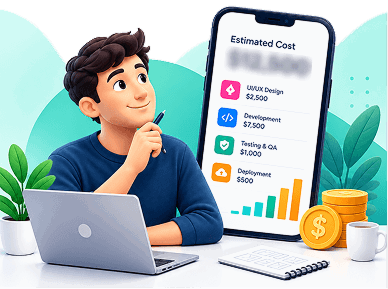
Pricing varies because no two projects are the same. The blockchain platform you choose, how complex the token logic is, and what features need building all affect the final number. Most projects handled by our crypto token development team fall somewhere between $5,000 and $50,000. Larger projects with custom tokenomics, multi-chain deployment, and full security audits go beyond that. We give clear estimates after the discovery stage, not before.
A standard token build takes a few weeks. Projects involving custom tokenomics, third-party integrations, and full NFT token development services typically run several months. As an experienced blockchain development company, we work in agile sprints, so you see progress regularly and can make decisions without waiting until the end to find out if something needs to change.
Idea + Experience = Excellence! Our skills of developing the web things and your ideas are perfect together. While developing the online presence of our listed and top-rated clients our section of the client's corner is quite enough to explain who we are and what can we do.
Owebest did an excellent job working on my plugin! I will definitely hire again to work on this project in the future. The only issue is that it took just a little bit of time to get them to understand what exactly my project was, but after we sorted that out, they performed remarkably.
Put in a lot of effort to understand the scope of work, and suggested good solutions! will hire them again!
Great work ! It was a pleasure to work with Owebest ! I'm very happy about the solution they developed for me ! We sometimes had some communication issues but all together I'm more than happy with their work!
We have being working together for a long time. They are awesome.