







10 Best Programming Languages for Blockchain Development in 2026
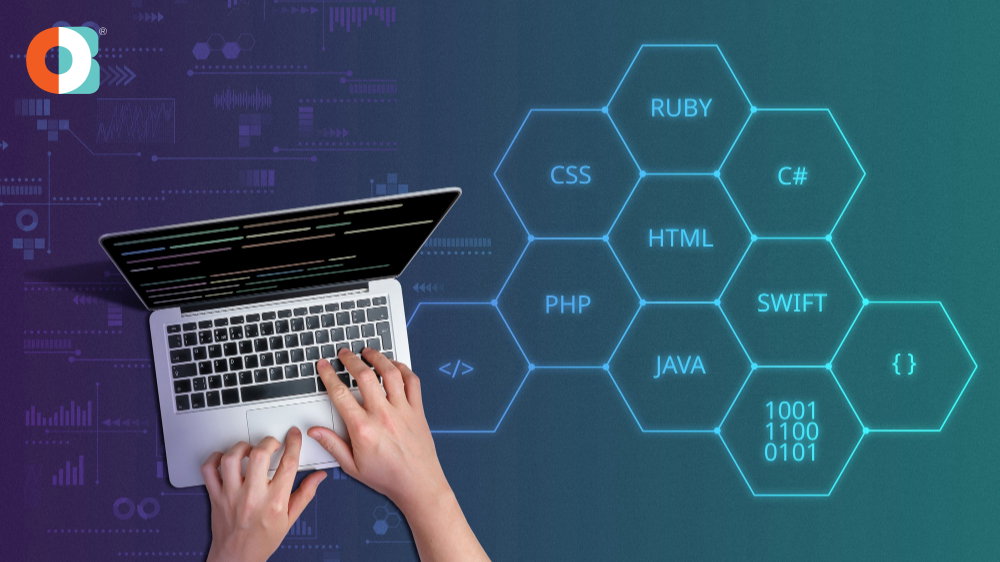
Every blockchain project’s success or failure is determined by one decision in specific: which programming language is used to develop the project? When you learn about programming languages, you understand that the development cost of every blockchain project varies depending on this specific choice. Researchers at Messari stated that Ethereum smart contracts can cost 50 to 100 times more to execute logic than on Solana or Polygon. This difference might not seem significant right now, but as the annual transaction volume grows into the millions, so does the cost.
This logic clearly defines that choosing the right programming language is a foundation of every blockchain project. This decision can affect three critical factors: hiring cost of the developer, ongoing operational costs, and security audit timelines.
For businesses exploring lists of blockchain development company partners or deciding whether to hire blockchain developers, choosing a programming language is the first crucial step. This also determines whether your blockchain project will launch in just a quarter or will take an entire year to develop. This decision will also help you understand whether gas fees will consume just 5% or a massive 40% of your revenue.
The trade-offs associated with an NFT marketplace that requires a quick rollout are different than an enterprise supply chain in which all transitions between states must be formally verified. The terrain has grown past the Solidity of all things. One can say: What was successful in 2017 ICOs is a technical debt on 2026 regulatory-compliant token platforms with millions of dollars of volume per day.
Why Programming Language Selection Matters for Blockchain Projects
The choice of language in blockchain coding languages is an issue of more importance compared to the performance and developer experience in traditional application development. Smart contracts are once deployed and cannot be fixed with a few-line patch. Billion-dollar losses due to security weaknesses in blockchain code have rendered language-level security features important and not optional.
The presence of talent has a direct effect on the employment process as well as the cost of labor. The solidity developers earn $120,000-180,000 each year in competitive markets, yet thousands of them are found throughout the world. Haskell blockchain developers? Expect $180,000-250,000 and 6+ month searches. The dilemma of inherently flexible languages that are widely adopted, versus highly specialized languages that have blockchain-specific optimizations, is a matter of budget, rather than a matter of technical choice.
Platform architecture identifies viable choices prior to assessing languages. Developing on Ethereum is equivalent to Solidity or Vyper. Rust is needed to attack Solana. By designing bespoke blockchains, then everything is possible, but security, performance, availability of developers, and ecosystem maturity trade-offs must be evaluated.
The nature of our application of these factors at Owebest Technologies is to recommend technology stacks to clients in blockchain initiatives as a complete system, understanding that the best options differ radically based on the services provided (NFT marketplace development, enterprise supply chain tracking, or decentralized finance protocols).
1. Solidity: The Dominant Smart Contract Language
In the case of business, this maturity directly corresponds to less risk and speed of deployment. By having security auditing firms such as Trail of Bits or ConsenSys Diligence analyze Solidity code, they are comparing against decades-old vulnerability databases and best practices. New languages do not contain this institutional knowledge--your audit is a sort of latter-day geography, not a rigorous checking up.
Nevertheless, the JavaScript-like language of Solidity generates an illusion of familiarity that conceals underlying differences in execution models. Web-to-native developers often cause reentrancy bugs, integer overflow errors, and gas optimization errors worth millions of dollars. The 2016 DAO Hack (60 million dollars), the 2016 Parity wallet lockdown (300,000 ETH), and the endless list of smaller attacks are due to Solidity being a language with a higher learning curve than syntax implies.
2. Rust: Secure Modern Development
The real-world effect is reflected in the production measures. One DeFi application that handled 50,000 transactions per day on Ethereum incurred $8,000 of gas fees each week. Upon porting core logic to Solana in Rust, the same amount of transactions incurs the cost of $400 per week- a 95 percent drop to allow business models that are not possible on high-fee platforms. This trade-off is realized in development timelines.
In comparison to Solidity, which has the same functionality, teams are reporting 30-40% longer initial development with Rust. Prototyping is slowed down by fighting the compiler to produce memory-safe and data race-free code. But the cost in terms of buggy post-launch releases that need emergency patches is drastically offset by production deployments.
3. JavaScript/TypeScript: The interface between Web2 and Web3
JavaScript and TypeScript will introduce the largest community of developers in the world, which is estimated to be 17.5 million, into blockchain development. Libraries such as Hardhat and ethers.js provide blockchain access through comfortable patterns, but with a major setback: JavaScript is used to test, deploy, and integrate the frontend as opposed to writing the smart contracts. In the case of businesses, the ubiquity of JavaScript would reduce the costs of recruiting a developer by 40-60 percent compared to a dedicated blockchain language.
Without context-switching languages, full-stack developers are able to work on frontend interfaces, backend services, and blockchain integration, including blockchain payment gateway development. An example of a fintech start-up that shortened their engineering recruitment process by 5 months to 6 weeks was by focusing their search on JavaScript developers interested in blockchain, instead of trying to find experienced Solidity developers. TypeScript introduces some form of static typing, which highlights errors at development time, instead of runtime, but the underlying limitation is that real on-chain code still needs Solidity, Rust, or platform-specific languages. JavaScript is bright in the applications when blockchain is used as a back-office element instead of a final product.
4. Enterprise Blockchain Infrastructure
Most of the blockchain applications operate on the Go (Golang) infrastructure layer. Hyperledger Fabric, which Walmart uses to track its supply chain and Maersk to log shipments, is an entirely Go-programmed platform. Geth is the most used client software written in Go. In the case of projects of enterprise blockchain development companies, Go is the best compromise: the language is not as complex as C++, and not as fast as Python, but it has the support of Google and is used widely in cloud-native development.
Organizations that create their own or permissioned blockchains to track their supply chains, medical records, or even to settle financial transactions continue to prefer Go because of its stability and simple deployment patterns. Go developers are easily accessible, unlike languages that are specific to blockchain, and the compile-time error-checking of Go allows most production problems to be avoided. Although Go is not generally the language of smart contract logic, it is a great language to create the infrastructure behind smart contracts.
5. C++: High-Performance Blockchain Core
C++, interestingly, is still a primary language that prioritizes performance over any other factor. For instance, Bitcoin, EOS, and Ripple utilize C++ in core functionalities as it requires limited hardware control. C++ offers optimization features that are required to develop a new Layer-1 blockchain.
Best for: New blockchain platforms development, followed by consensus algorithms, and high-frequency trading systems.
6. Python: Research and Rapid Prototyping
For prototyping blockchain and back-end services, that’s where Python is used. Interestingly, Python might not be used in utilizing product smart contracts. Python is widely known to model tokenomics and simulate networks. Businesses looking at blockchain, Python is an ideal choice to develop proofs-of-concept and commit to production languages.
Best: blockchain research, tokenomics modeling, backend services, data analytics, and testing framework.
7. Vyper: Ethereum Alternative that is security-centered
Vyper has limited features intentionally to minimize attack surfaces and enhance auditability. The restrictions of Vyper are strengths in token development services and financial smart contracts, where security is more important than flexibility. Auditing is less expensive than Solidity because it is less complex, but it is not suitable for complex applications because of its limitations.
Best: Financial smart contracts, token contracts, DeFi protocols, and Python-based teams.
8. Enterprise: Java, Enterprise Legacy Integration
Java has enterprise credibility with platforms such as Hyperledger Besu, making use of it. In companies having a Java infrastructure in place, blockchain projects use Java to minimize training and are naturally compatible with existing systems, which are attractive to the enterprise blockchain development company partners of regulated industries.
Best on: Enterprise integration, Java-based organizations, regulated markets, and consortium blockchains.
9. Move: Next-Generation Smart Contract Safety
Move as Aptos and Sui blockchain powerhouse sees digital assets as assets that are incapable of being duplicated or destroyed by mistake. In the case of cryptocurrency development company projects, it offers a level of safety in the management of digital assets never seen before, but the novelty of Move has resulted in a lack of tooling and small communities of developers.
Ideal use: Aptos or Sui projects, valuable digital assets, and security-focused organizations.
10. Haskell: Formal Verification and Cardano.
The Cardano Plutus platform is implemented in Haskell and introduces the mathematical rigor of functional programming to blockchain. Formal verification of Haskell is primarily utilized in mathematical correctness in NFT marketplace development services and sophisticated financial application development.
Best for: Applications like Cardano, followed by formal verification, and intricate financial logic.
Strategic Language Selection for Business Outcomes
The selection of these blockchain programming languages involves a trade-off between technical and business needs, risk tolerance, and resources. It is not the latest and most sophisticated language that will be used; it is the language that will convey the business goals within the budget and schedule.
Organizations that are based on others are inheriting language selection. Ethereum development implies Solidity or Vyper. Solana means Rust. Cardano means Haskell. The development of custom blockchains opens the door to everything, but it needs to consider trade-offs among security, performance, availability of developers, and the maturity of the ecosystem.
In the case of most business applications, they are best served by established languages with large ecosystems. Ethereum-based projects are solid. Rust is a performance-critical language. Go for enterprise infrastructure. Newer languages such as Move have better safety models, but must be prepared to take pioneering risks and have fewer talent pools.
Language priorities are set by security requirements. Applications that process millions of transactions per day require formally-verifiable languages (Haskell, Move) or well-developed security infrastructure (Solidity with well-established audit practices). The internal enterprise applications are capable of giving more priority to the speed of development as opposed to maximum security.
Architecture is influenced by performance needs. HFT platforms require every microsecond, and C++ or Rust is now a requirement. Business applications can tolerate a very slow execution rate to support much faster development periods with higher-level languages.
Availability of talent affects the time taken to hire and the cost incurred. Uncommon skills, such as Haskell or Move command, high pay (180,000-250,000 and more), and are recruited over 6 months. JavaScript and Python developers are numerous and cheap (90,000-140,000), yet they need training in blockchain.
Velocity is influenced by ecosystem maturity. Languages that have a rich library, debugging, frameworks, and knowledge in the community increase the development speed. New languages need to be self-created infrastructure; tooling ecosystems are not covered by technical excellence.
Selecting becomes more and more dependent on regulatory compliance, as governments examine blockchain applications. Audit trails, formal verification, and clear code logic languages facilitate demonstrations of compliance. A tokenized securities platform based in the EU selected Haskell in particular, due to the ease of formal verification in proving to regulators the compliance of the system.
At Owebest Technologies, we assist businesses to make such decisions by weighing particular project needs against language needs, market talent, and long-term maintenance needs.
Partner with Experienced Blockchain Development Experts
One of the dimensions of successful blockchain development is the choice of programming languages. Our blockchain development firm, Owebest Technologies, has more than ten years of experience in developing decentralized applications, smart contracts, and blockchain infrastructure on various platforms and languages.
Our team brings together technical proficiency and business acumen to provide you with token development services, NFT marketplace development services, cryptocurrency platforms, or enterprise blockchain integration. We assist clients in analyzing technology alternatives, recruit blockchain development firms with the right level of skills, and provide blockchain solutions with business goals instead of only providing technical functionality.
Our services run the entire lifecycle of blockchain development, including the initial strategy and architecture, development, security audit, deployment, and ongoing maintenance. We guarantee the quality and security standards of your investment and users with CMMI Level 3 certified processes.
Getting prepared to develop a blockchain in your business? Get in touch with Owebest Technologies at www.owebest.com regarding your project needs, consider the use of a programming language, and get a real cost estimate provided by a team of professional blockchain developers who know the technology and its business application.